




The Lenten Season presents a unique opportunity to grow closer to God and to distance oneself from evil.
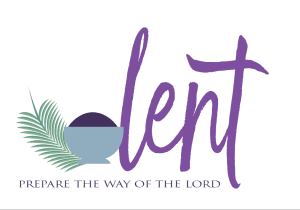
Lent is one of the most important liturgical seasons of the Church’s calendar and begins on Ash Wednesday, which this year falls on Feb. 18, 2026. The faithful prepare during this season for Holy Week, those sacred days in the Church calendar when we celebrate the Passion, Death and Resurrection of Jesus Christ, the Paschal Mystery of the Faith.
“The faithful are all called to know better their faith, to live it more deeply, and share their love of the Lord with others,” Bishop Frank J. Dewane said. “This ties in directly with our Lenten call to turn our lives over to Christ and to be more that man or woman of God He calls us to be. We are called to bear witness to the Lord by following the example of His suffering, making us worthy to share in His Resurrection.”
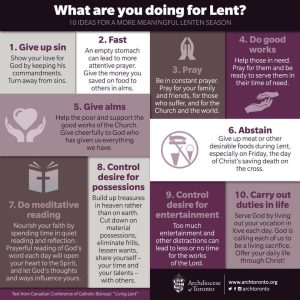
The three pillars of the Lenten observance, fasting, prayer, and almsgiving express conversion in relation to oneself, to God, and to others. The Lord calls each person to total commitment, something the Bishop said was not a suggestion but a command as written in the Gospel of Matthew.
“It is a command that you and I are to go out to pray, to fast and we are to give alms. Set about during this Lenten Season to raise your mind and heart to God. Choose how you are going to do that, keeping in mind that Matthew identifies the path you should take,” Bishop Dewane said.
By practicing these observances together, they become more than the sum of their parts. Bishop Dewane said by joining the pillars together we hear the Word of God more deliberately and devote ourselves to prayer more ardently as we celebrate the Paschal Mystery. The pillars become part of a faith that flourishes and a heart that is increasingly dedicated to the Lord.
Fasting and abstinence
Fasting and abstinence is not just about food, or lack of it, but instead about sacrifice for the benefit of our spiritual lives – a fasting from sin. Sacrifice and self-denial should not be viewed as something to lament but instead should be viewed as an opportunity to remove anything that distracts us from Jesus Christ and a reception of grace. Fasting and abstinence are about spiritual conversion and renewal, not solely about meat and no food.
For early Christians, fasting was an important and meaningful Lenten practice in commemoration of Christ’s Passion and Death. The current Lenten discipline, set forth by the Roman Catholic Church, consists of both fasting and abstinence on Ash Wednesday (Feb. 18) and Good Friday (April 3), as well as abstaining from meat each Friday of Lent.
“This is an opportunity to teach ourselves an internal discipline,” Bishop Dewane said. “It is good to recognize and to use as a reminder of what it is we should be fasting from and that is sin. When fasting, or abstaining from meat, this Lenten Season try not to just ‘follow the motions,’ so to speak, make an extra effort to improve upon the spiritual areas of one’s life.”
Prayer
The second Lenten pillar is prayer, which the Catechism tells us is coupled with charity. All Catholics are called to a meaningful prayer life. A prayer life includes both personal, which comes from the heart, and traditional prayer. With both dimensions, the faithful grow closer to both Christ Himself and His Church.
Prayer is an indispensable component of the Catholic Faith. By growing and maturing in faith, prayer becomes an act of worship. Prayer is recognized as a critical act of public worship in the Church, especially in the Holy Sacrifice of the Mass.
The five basic forms of prayer are blessing, petition, intercession, thanksgiving, and praise. When someone prays in any one of these forms, they are expressing a different emotion, need, concern or appreciation. No two prayers from the heart are the same, just as no two conversations are the same.
“In this Lenten Season we are called to pray with a deeper sense of spirituality and examine how we can step up our prayer life,” Bishop Dewane said. “This goes beyond a short rote prayer, which can be done in a second and does not require meditation or reflection; prayer requires the input of the heart and soul. And just as importantly, we have to have the patience to listen in prayer. Listen to what the Lord is saying and how is it that God speaks to you.”
Almsgiving
The third pillar of Lent, almsgiving, is coupled in the Catechism with self-denial. While often mentioned as the last of the three traditional pillars of the Lenten observance, it is certainly not the least of the three and is often completely misunderstood. The Church’s expression of almsgiving is an act of self-denial, or an expression of charity and assistance extended to the needy.
By almsgiving during Lent, one not only expresses care for those in need, but also expresses a sign of gratitude for all God has provided in one’s own life. These acts of charity are connected to the responsibilities of living the faith that begins with baptism and is reignited in the Sacrament of Confirmation.
“Almsgiving is about taking the extra step in reaching out in charity and love for the right reason, not just to impress others,” Bishop Dewane said. The Catechism states, “almsgiving, together with prayer and fasting, are traditionally recommended to foster the state of interior penance.”
“In a sense, almsgiving is a type of prayer,” Bishop Dewane said. “Because almsgiving requires sacrifice. It is also a sort of fasting from the material world, in what could have been purchased. We try too hard to silo these pillars and not let them be an integrated expression from our soul as to why we are doing this – to recall the Paschal Mystery – how Jesus saved us – and our being open to receiving the greatness of that gift.”
Reconciliation
In addition, Bishop Dewane said the precept of confessing grave sins and receiving Holy Communion, at least once during the Lenten Season, merits a reminder.
To facilitate this requirement, every Parish in the Diocese of Venice will be open with a confessor present 4 to 8 p.m., Friday, March 27, and 9 a.m. to noon, Saturday, March 28. Check with your local Parish for additional confession times or the availability of a Penance Service. These opportunities are made available so that the faithful may find ample opportunity to receive God’s Mercy in the Sacrament of Reconciliation during the Lenten Season.
REGULATIONS ON FASTING AND ABSTINENCE
Ash Wednesday, Feb. 18, 2026, and Good Friday, April 3, are days of fast and abstinence. All Fridays of Lent are also days of abstinence from meat.
Fasting is to be observed on Ash Wednesday and Good Friday by all Catholics between the ages of 18 years and 59 years (inclusive). On a fast day, one full meal is allowed. Two smaller meals, sufficient to maintain strength, may be taken according to each one’s needs, but together they should not equal another full meal. In the context of observing the fast, eating between meals is not permitted, but liquids are allowed. If possible, the fast on Good Friday is to continue until the Easter Vigil (on Holy Saturday night) as the “paschal fast” to honor the suffering and death of the Lord Jesus, and to prepare ourselves to share more fully and to celebrate more readily His Resurrection.
Abstinence from meat is to be observed by all Catholics who are 14 years of age and older on Ash Wednesday and all Fridays of Lent, including Good Friday.
(Note: If a person is unable to observe the above regulations due to ill health or other serious reasons, they are urged to practice other forms of self-denial that are suitable to their condition.)