




By Bishop Emilio E. Biosca, O.F.M. Cap.
Peace and Goodness.
The days from September 2–13, 2026, were a blessed time of grace, formation, fraternity, and renewed hope. I return to the Diocese of Venice with a grateful heart.
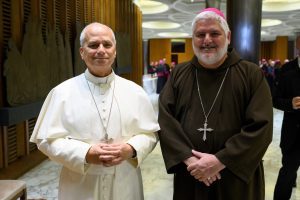
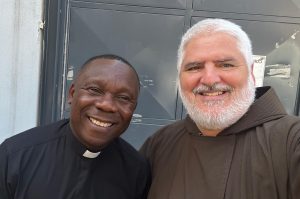
Upon arriving in Rome, the Capuchin brothers, Father Diogo Escudero and Brother Aklilu Petros, met me at the airport and generously accompanied me throughout my stay. On the first day, Father Diogo and I visited the tombs of St. Peter and St. Paul to pray for the faithful of the Diocese of Venice. The pastoral visits were still fresh in my heart, and I was grateful to entrust our priests, deacons, religious, and lay faithful to the intercession of these great Apostles.
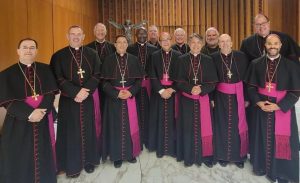
The first 10 days were dedicated to the new bishops formation course (Annual Formation Course for New Bishops from Around the World, with its theme: “In Christ, Guardians of the ‘Magnifica Humanitas’ in Times of Transformation”), which brought together approximately 150 bishops from around the world who had been ordained during the past year. It was a wonderful opportunity to meet bishops from different cultures and pastoral situations and to recognize the unity of our vocation and mission in the Church.
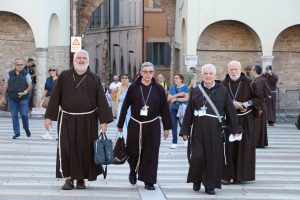
The course provided an extraordinary opportunity to listen, learn, reflect, and share. Seventeen formal presentations were given by bishops, archbishops, and cardinals, addressing various dimensions of the vocation and ministry of a bishop. Each presentation was followed by questions and discussion, allowing the new bishops to share their pastoral experiences, hopes, and concerns.
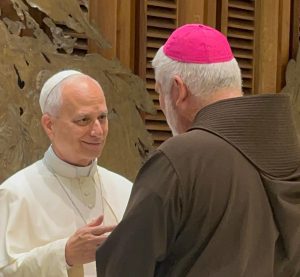
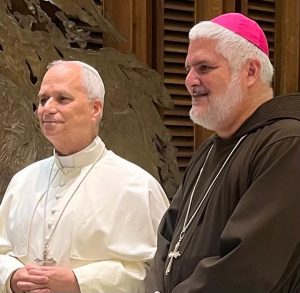
The seventeenth, and final, presentation was given by the Holy Father, Pope Leo XIV on Sept. 10, 2026. He reminded the new bishops that our ministry begins with discipleship and that we must remain close to Jesus through prayer, Scripture, and the Eucharist. He called us to embody the compassionate heart of Christ, to love and support our priests, to remain close to our people, and to serve with pastoral charity.
This encounter was especially memorable because the Holy Father opened the floor for the new bishops to ask questions and share their thoughts. For more than an hour, we experienced a genuine closeness and fraternity with the Successor of Peter. It was deeply encouraging and reminded us that the episcopal ministry carries great responsibility and none of the bishops are alone.
The daily celebration of Mass was at the heart of the entire course. Each day, a bishop, archbishop, or cardinal offered the homily, grounding our reflections in the Eucharist. This was an important reminder that episcopal ministry ultimately flows from communion with Christ. Everything we do as bishops must begin and end at the altar. Before we can shepherd others, we must first allow ourselves to be shepherded by Christ.
Formation and Fraternity in Assisi
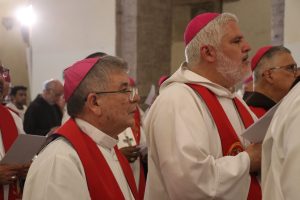 From Rome, the journey continued to Assisi for the gathering of Capuchin bishops from September 10–13. These days were a natural continuation of the formation received in Rome, with a particular emphasis on our identity and vocation as Capuchins.
To gather in Assisi was itself a profound grace. We were in the places made holy by the lives of St. Francis and St. Clare. Our time together included prayer, meditation, Eucharistic celebrations, and formation sessions focused on the responsibilities of episcopal ministry and the importance of remaining faithful to the charism we received as Capuchin friars.
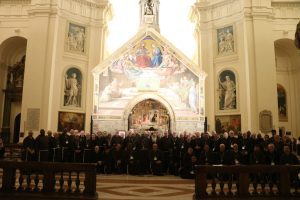 On the final day of the gathering in Assisi, the Capuchin Cardinal Sean O’Malley celebrated Sunday Mass and preached on Matthew 18:21–35, teaching that a defining mark of a Christian is the willingness and then the ability to forgive one’s brother from the heart. He shared examples of the genuine fruit of forgiveness and reconciliation. This was a profound teaching that can only truly be lived out through the action of the Holy Spirit. We pray for this grace and for each other.
Perhaps the greatest gift of Assisi was the fraternity we experienced. We shared meals, prayer, and many conversations. These ordinary moments became important occasions of grace.
Thank you all for your kindness and support.
To read what Pope Leo XIV said during the new bishops meeting on Sept. 10, please visit https://dioceseofvenice.org/newbishops/.
 Bishop Emilio said this presentation explored the bishop’s identity and ministry through the “episcopal ordination prayer, especially the phrase ‘God has willed to be glorified in those whom he has chosen.’ Episcopal ministry begins with divine initiative and election, and its purpose is to make Christ visible through humble, holy, self-giving service, rather than personal achievement, prestige, or power.”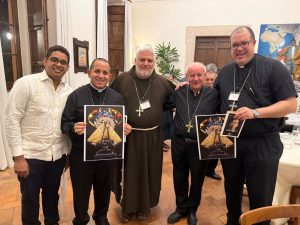
 Earlier in his trip to Rome, Bishop Emilio took time to pray before the tombs of the apostles Ss. Peter and Paul, as well as those of several popes, carrying with him the prayers of the faithful of the Diocese of Venice. He also visited the tombs of St. John Paul II, St. John XXIII, St. Paul VI, St. Pius X, and Pope Benedict XVI.