




News briefs for the week of August 7, 2026

Welcome to our new shepherd, Bishop Emilio! 

Thank you to all who joined and prayed with the Diocese of Venice during the Bishop Emilio’s Ordination weekend, either in person or via livestream. Recordings of the livestreams from both Solemn Vespers and the Ordination and Installation Mass can be accessed here. Bishop Emilio’s remarks after Mass are also available at the same link. More information about our new bishop can be found on the Diocese’s website.


Assumption – Aug. 15

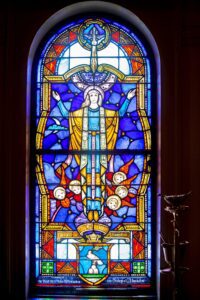
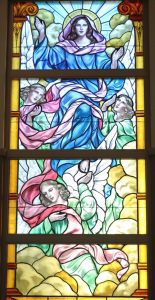
The Solemnity of the Assumption of the Blessed Virgin Mary, Aug. 15, 2026, is not a holy day of obligation this year because it falls on a Saturday. On this day the Church acknowledges and celebrates the fact that Mary, the Mother of God, was assumed into Heaven at the end of her earthly life. “The Most Blessed Virgin Mary, when the course of her earthly life was completed, was taken up body and soul into the glory of heaven, where she already shares in the glory of her Son’s Resurrection, anticipating the resurrection of all members of his Body” (CCC 974).

Prayer to Mary, Assumed into Heaven

O Immaculate Mary, Assumed into heaven,
you who are most blessed in the vision of God:
of God the Father who exalted you among all creatures,
of God the Son who willed that you bear Him as your Son and that you should be His Mother,
of God the Holy Spirit who accomplished the human conception of the Savior in you.
O Mary, most pure
O Mary, most sweet and beautiful
O Mary, strong and thoughtful woman
O Mary, poor and sorrowful
O Mary, virgin and mother
woman very human like Eve, more than Eve.
You are near to God by your grace and by your privileges
in your mysteries
in your mission, in your glory.
O Mary, assumed into the glory of Christ
in the complete and transfigured perfection of our human nature.
O Mary, gate of heaven
mirror of divine light
ark of the Covenant between God and mankind,
let our souls fly after you
let them fly long your radiant path,
transported by a hope that the world does not contain eternal beatitude.
Comfort us from heaven, O merciful Mother,
and guide us along your ways of purity and hope
till the day of that blessed meeting with you
and with your divine Son
our Savior, Jesus. Amen!

Comedy night a success
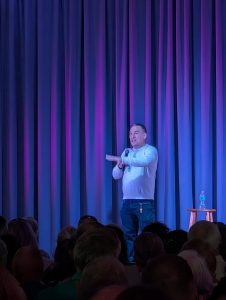
San Pedro Parish in North Port hosted a comedy night on Aug. 1, 2026, featuring Catholic comedian Steve Simeone. The evening was an overwhelming success as Simeone entertained a sold-out crowd. All proceeds from the evening will go to benefit the “Reason for Our Hope Campaign.”


Pennies for Babies!

The Pennies for Babies Fund is a Catholic Charities Diocese of Venice initiative that supports pregnant mothers and their newborn babies in need. It is part of the Diocese’s broader Walking with Moms in Need program. The fund raises money to provide critical assistance to expectant mothers and newborns. If you wish to help mothers and babies in need, please consider giving to the Pennies for Babies Fund. Send checks (not cash) to Catholic Charities Pennies for Babies Fund, 1000 Pinebrook Road, Venice, FL 34285. With questions, please contact Tavia Ames, ames@dioceseofvenice.org, 941-441-1101.


Save the Date!

Married and engaged couples are invited to the sixth annual Together in Holiness Marriage Conference on Oct. 24, 2026, from 9 a.m.–4:30 p.m. at Our Lady of Light Parish in Fort Myers. Spend quality time with your spouse, hear from dynamic national and local speakers, and rejuvenate your marriage through the Sacraments. Registration: $64/couple and $5/child for on-site childcare. An Early Bird discount is available through September 14 as well as scholarships upon request. This conference is presented by the Diocese of Venice and the St. John Paul II Foundation. To register, visit www.forlifeandfamily.org/events/th26-vnfl/ With questions, contact Jim Gontis, gontis@dioceseofvenice.org.


Theology on Tap in Sarasota Aug. 13

Calling all young adults! Join Catholic young people from across the Diocese for an evening of fellowship, faith and fun! Theology on Tap is an opportunity for young adults in their 20’s and 30’s to explore faith topics in a relaxed social setting. Theology on Tap meets on the third Thursday of every month at Oak & Stone, 5405 University Parkway, University Park. No need to register in advance. Next month, the group will meet on Thursday, Aug. 13, 2026, 7 p.m. Featured speaker is Father John Belmonte, SJ, Superintendent of Catholic Education for the Diocese of Venice. To learn more, contact Andres Prias, prias@dioceseofvenice.org 941-441-1122.


Catholic Charities summer appeal continues
Every day, Catholic Charities, Diocese of Venice, serves the most vulnerable population in the Diocese’s 10 counties by feeding, housing, empowering, and helping all in need. This summer, you can be the one that makes a difference. Your acts of kindness have the power to transform lives. The Catholic Charities “Summertime and the Giving is Easy” appeal needs your support. The giving is easy! To donate, visit Summertime Giving, or mail a check to Catholic Charities, “Summertime and the Giving is Easy,” 1000 Pinebrook Road, Venice, FL 34285. If you have any questions, please call 941-488-5581. The appeal continues through August.


Pray for Safety! Hurricane Season

The 2026 Atlantic hurricane season continues through November 30. With a history of these storms producing destruction in the region, please pray for safety. To view or download a Prayer for Safety in Hurricane Season in English or Spanish languages, visit the Diocese of Venice website.


Walking with Moms in Need spotlight

The Venice Area Pregnancy Care Center is a valued partner in the Diocese of Venice’s Walking with Moms in Need program. Serving families throughout southern Sarasota County, this center operates solely through volunteers and donations, providing compassionate material support to mothers, babies, and families facing difficult circumstances. The center is in need of donations, such as diapers (size large), toddler-sized clothing for boys, and more. Whether you’re seeking assistance, looking to volunteer, or hoping to donate needed items, your support can make a meaningful difference in the lives of local families, especially mothers and children in need. To learn more, visitwww.vapcc.org.


Celebrate Priesthood Sunday and support seminarians

The faithful are being asked to support, encourage and educate future priests through the Venice Diocesan Council of Catholic Women Seminarian Fund. The Diocese is currently educating 21 men at various seminaries, and a donation of any amount would be a great help. The way the VDCCW supports seminarians is through celebrating Priesthood Sunday, Sept. 27, 2026. To do this in a special and lasting way, the VDCCW will facilitate sending an “IN HONOR OF” card to your parish priest. This is a gift that keeps on giving as all proceeds support the VDCCW Seminarian Fund (The donation amount will not be revealed to the recipient). To take part, please send the name of the priest you would like to honor, along with your donation, made out to VDCCW Seminarian Fund to: Cornelia Zanetti, Seminarian Fund Guardian, 5808 Gulf Drive, #204, Holmes Beach, FL 34217.


Volunteers needed for Prison Outreach

Join the team of Diocesan volunteers who enter county jails and state prisons within the 10-county Diocese of Venice to do pastoral outreach, distribute the Eucharist and facilitate programs. Priests, Deacons, and lay volunteers are encouraged to assist in this ministry. Volunteers will first participate in an orientation program before entering the facility and will shadow experienced volunteers until they feel comfortable. Times and days vary by facility. Please contact Joe Mallof at 224-217-7139 or Bob Hiniker 863-558-0407 to learn where you can fit into this joyful opportunity.


Support After Abortion help available

Are you or someone you know struggling because of a past abortion? You are not alone. Healing retreats and support are available for anyone who has experienced an abortion, including mothers, fathers and other family members who have been hurt. For help, or to learn more about the Diocese of Venice support after abortion program, Project Rachel, simply call or text 941-412-5860, or email project.rachel@dioceseofvenice.org, in English or Spanish. All contacts are confidential.


OLPH seeks volunteers

Many hands make light work. Our Lady of Perpetual Help Retreat Center in Venice is seeking volunteers. Aid the Diocesan retreat center in providing a peaceful, welcoming atmosphere for those who come seeking transformation in Christ. Areas of need include: gardening, dishwashing, dining room, answering the phones and more. For more information, or to sign-up, please call 941-486-0233, or email info@olph-retreat.org.
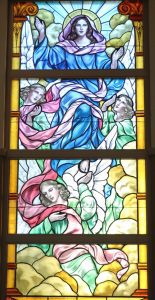
Assumption: dedicated to Mary Most Holy – Holy day of obligation on Aug. 15

“At the conclusion of Her earthly life, the Mother of Christ was raised in soul and body to Heaven, that is, in the glory of eternal life, in the full communion with God,” said Pope Francis when describing why on Aug. 15 the Church celebrates one of the most important feasts dedicated to the Blessed Virgin Mary: the Solemnity of Her Assumption.

The Catechism of the Catholic Church describes the Assumption as follows: “The Most Blessed Virgin Mary, when the course of her earthly life was completed, was taken up body and soul into the glory of heaven, where she already shares in the glory of her Son’s Resurrection, anticipating the resurrection of all members of his Body” (CCC 974).

Bishop Frank J. Dewane stated, “Since death and the corruption of the human body is a consequence of sin, it would not be right that the Virgin Mary – who is free from sin – should be affected by this natural law. It is a privilege granted to Mary, as the Mother of Jesus.”

The Solemnity of the Assumption of the Blessed Virgin Mary is a Holy Day of Obligation. According to Church doctrine, Holy Days of Obligation are feast days on which Catholics are required to attend Mass and to avoid (to the extent that they are able) servile work.

In celebration of this important Solemnity, Parishes throughout the Diocese of Venice offer additional Masses to allow the faithful to participate in this Holy Day of Obligation. In addition, Diocesan Catholic Schools also celebrate school-wide Masses.

Pope Francis said that “Mary’s Assumption is a great mystery that concerns each one of us; it concerns our future. Mary precedes us on the way in which all those go, through baptism, have bound their life to Jesus, as Mary bound her life to Him. (This) Feast pre-announces the ‘new heavens and the new earth,’ with the risen Christ’s victory over death and the definitive defeat of the Evil One.”

Pope Leo XIV is scheduled to celebrate the Mass of the Solemnity at the Pontifical Parish of St. Thomas of Villanova at Castel Gandolfo. This is a return to the Papal tradition of hosting a public celebration of Mass of the Solemnity. Pope Francis only did so in 2013 at Castel Gandolfo, and in 2014 during an apostolic journey to South Korea. Pope Benedict XVI celebrated the Solemnity every Aug. 15 at Castel Gandolfo.

This Solemnity of the Assumption of the Blessed Virgin Mary is the oldest celebration of Our Lady. The original celebration, known as the “Memory of Mary” or “Falling Asleep of Mary” initially centered on the end of her earthly existence, and is commonly known as her “dormition.”

Soon the name was changed to the “Assumption of Mary,” since there was much more to the feast than the end of her earthly life. The belief that Mary had been taken up, body and soul, into heaven dates back to the Apostles themselves.

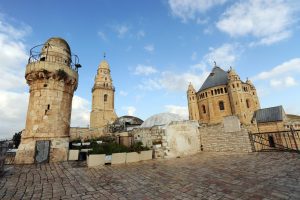
Clear from the beginning was that there were no relics of Mary to be venerated, and that an empty tomb stood on the edge of Jerusalem near the site of the end of her earthly existence or dormition. That location also soon became a place of pilgrimage. (Today, the Benedictine Abbey of the Dormition of Mary stands on the spot.)

In 1950, Pope Pius XII proclaimed the Assumption of Mary a dogma of the Catholic Church, therefore, an ancient belief became Catholic Doctrine and the Assumption was declared a truth revealed by God.

The declaration of the dogma was to “make our belief in our own resurrection stronger and render it more effective,” Pope Pius XII stated in a proclamation.

The proclamation went on to say that the definition of the Assumption “will contribute in no small way to the advantage of human society, since it (reflects and builds up) the glory of the Most Blessed Trinity, to which the Blessed Mother of God is bound by such singular bonds.”

It was also expected that the faithful would be called to a stronger piety toward their heavenly Mother and that those who meditate upon the glorious example Mary offers, be more convinced of the value of a human life entirely devoted to carrying out the heavenly Father’s will and to bringing good to others.

All the feast days of Mary mark the great mysteries of her life and her part in the work of redemption. The central mystery of her life and person is her divine motherhood, celebrated both at Christmas and a week later (Jan. 1) on the Solemnity of Mary, Mother of God. The Immaculate Conception (Dec. 8) marks the preparation for that motherhood, so that she had the fullness of grace from the first moment of her existence, completely untouched by sin. The Assumption completes God’s work in her since it was not fitting that the flesh that had given life to God himself should ever undergo corruption.

Prayer for the Feast of the Assumption

Almighty God,

You gave a humble Virgin the privilege of being mother of your Son,

and crowned her with the glory of heaven.

May the prayers of the Virgin Mary bring us to the salvation of Christ

 and raise us up to eternal life.

We ask this though our Lord Jesus Christ your Son

 who lives and reigns with you in the Holy Spirit,

one God, forever and ever,

Amen.


Assumption: a beautiful reflection on Mary Most Holy

Holy day of obligation on Aug. 15

“At the conclusion of Her earthly life, the Mother of Christ was raised in soul and body to Heaven, that is, in the glory of eternal life, in the full communion with God,” said Pope Francis when describing why on Aug. 15 the Church celebrates one of the most important feasts dedicated to the Blessed Virgin Mary: the Solemnity of Her Assumption.

The Catechism of the Catholic Church describes the Assumption as follows: “The Immaculate Virgin, when the course of her earthly life was finished, was taken up body and soul into heavenly glory, and exalted by the Lord as Queen over all things, so that she might be more fully conformed to her Son, the Lord of lords and conqueror of death.”

Bishop Frank J. Dewane stated, “Since death and the corruption of the human body are consequences of sin, it would not be right that the Virgin Mary – who is free from sin – should be affected by this natural law. It is a privilege granted to Mary, and closely connected to her being the Mother of Jesus.”

Pope Francis said that “Mary’s Assumption is a great mystery that concerns each one of us; it concerns our future. Mary, in fact, precedes us on the way in which all those go that, through baptism, have bound their life to Jesus, as Mary bound her life to Him. (This) Feast pre-announces the ‘new heavens and the new earth,’ with the risen Christ’s victory over death and the definitive defeat of the Evil One.”

While the Blessed Virgin has entered into heavenly glory, the Holy Father added that it does not mean that She is distant or detached from us. “The Assumption should bring eternal hope to the faithful… Mary is always there… She accompanies them, suffers with them, and sings of hope with them and brings victory over death.”

This Solemnity of the Assumption of the Blessed Virgin Mary is the oldest celebration of Our Lady. The original celebration, known as the “Memory of Mary” or “Falling Asleep of Mary” for it initially centered on the end of her earthly existence, is commonly known as her “dormition.”

Soon the name was changed to the “Assumption of Mary,” since there was much more to the feast than the end of her earthly life. The belief that Mary had been taken up, body and soul, into heaven dates back to the Apostles themselves.

Clear from the beginning was that there were no relics of Mary to be venerated, and that an empty tomb stood on the edge of Jerusalem near the site of the end of her earthly existence or dormition. That location also soon became a place of pilgrimage. (Today, the Benedictine Abbey of the Dormition of Mary stands on the spot.)

In 1950, Pope Pius XII proclaimed the Assumption of Mary a dogma of the Catholic Church, therefore, an ancient belief became Catholic Doctrine and the Assumption was declared a truth revealed by God.

The declaration of the dogma was to “make our belief in our own resurrection stronger and render it more effective,” Pope Pius XII stated in a proclamation.

The proclamation went on to say that the definition of the Assumption “will contribute in no small way to the advantage of human society, since it (reflects and builds up) the glory of the Most Blessed Trinity, to which the Blessed Mother of God is bound by such singular bonds.”

It was also expected that the faithful would be stirred up to a stronger piety toward their heavenly Mother and that those who meditate upon the glorious example Mary offers, be more convinced of the value of a human life entirely devoted to carrying out the heavenly Father’s will and to bringing good to others.

Pope Francis said that the current devotion the faithful throughout the world have toward the Blessed Virgin confirms the earlier expectations of Pope Pius XII. “We pray to Mary in a particular way, through the Rosary. This prayer brings us closer to the Blessed Mother and to her Son. We join in her suffering and her glory and rejoice looking to eternity and giving us hope that we, too, will follow Our Lady when our life is ended.”

All the feast days of Mary mark the great mysteries of her life and her part in the work of redemption. The central mystery of her life and person is her divine motherhood, celebrated both at Christmas and a week later (Jan. 1) on the Solemnity of Mary, Mother of God. The Immaculate Conception (Dec. 8) marks the preparation for that motherhood, so that she had the fullness of grace from the first moment of her existence, completely untouched by sin. The Assumption completes God’s work in her since it was not fitting that the flesh that had given life to God himself should ever undergo corruption.

Our Sunday Visitor contributed to this report.

Holy day of obligation

The Solemnity of the Assumption of the blessed Virgin Mary is a Holy Day of obligation this year. Holy days of obligation are feast days on which Catholics are required to attend Mass and to avoid (to the extent that they are able) servile work. The observance of Holy Days of Obligation is part of the Sunday Duty, the first of the Precepts of the Church. To accommodate this obligation, many Parishes throughout the Diocese offer vigils or extra Masses on the Solemnity. Every Sunday, the Lord’s Day, is recognized as a holy day of obligation and Catholics are bound to participate in Mass on Sunday or at an anticipated Mass on Saturday in the late afternoon or evening. In the United States, the following feasts are considered Holy Days of obligation: Mary, Mother of God (Jan. 1), Assumption of the Blessed Virgin Mary (Aug. 15), All Saints (Nov. 1), Immaculate Conception (Dec. 8), Nativity of the Lord Jesus (Christmas – Dec. 25). All Saints, Mary, Mother of God and the Assumption are not days of obligation if they fall on a Saturday or Monday.

Assumption: a beautiful reflection on Mary Most Holy

“At the conclusion of Her earthly life, the Mother of Christ was raised in soul and body to Heaven, that is, in the glory of eternal life, in full communion with God,” said Pope Francis when describing why on Aug. 15, 2022, the Church celebrates one of the most important feasts dedicated to the Blessed Virgin Mary: the Solemnity of Her Assumption.

Pope Francis said that “Mary’s Assumption is a great mystery that concerns each one of us; it concerns our future. Mary, in fact, precedes us on the way on which all those go that, through Baptism, have bound their life to Jesus, as Mary bound her life to Him. That one of us dwells in the flesh in Heaven gives us hope: we understand that we are precious, destined to rise again. God does not allow our bodies to vanish into nothing. With God, nothing is lost… It is beautiful to think that the humblest and loftiest creature in history, the first to win heaven with her entire being, in soul and body, lived out her life for the most part within the domestic walls, she lived out her life in the ordinary, in humility.”
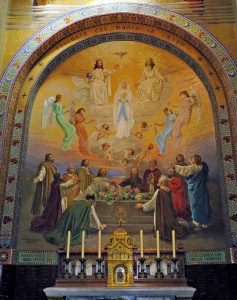
While the Blessed Virgin has entered into heavenly glory, the Holy Father added that “this does not mean that She is distant or detached from us; the Assumption should bring eternal hope to the faithful… May we not be robbed of hope, because this strength is a grace, a gift from God which carries us forward with our eyes fixed on heaven. Mary is always there… she accompanies them, suffers with them, and sings of hope with them and brings victory over death.”

The Catechism of the Catholic Church describes the Assumption as follows: “The Immaculate Virgin, when the course of her earthly life was finished, was taken up body and soul into heavenly glory, and exalted by the Lord as Queen over all things, so that she might be more fully conformed to her Son, the Lord of lords and conqueror of death.”

This Solemnity of the Assumption of the Blessed Virgin Mary is the oldest celebration of Our Lady. The original celebration, known as the “Memory of Mary” or “Falling Asleep” of Mary for it initially centered on the end of her earthly existence, is commonly known as her “dormition.”

Soon the name was changed to the “Assumption of Mary,” since there was much more to the feast than the end of her earthly life. The belief that Mary had been taken up, body and soul, into heaven dates to the Apostles.

It was clear from the beginning that there were no relics of Mary to be venerated, and that an empty tomb stood on the edge of Jerusalem near the site of the end of her earthly existence or dormition. That location also soon became a place of pilgrimage. (Today, the Benedictine Abbey of the Dormition of Mary stands on the spot.)

In 1950, Pope Pius XII proclaimed the Assumption of Mary a dogma of the Catholic Church, therefore, an ancient belief became Catholic Doctrine and the Assumption was declared a truth revealed by God.

The declaration of the dogma was to “make our belief in our own resurrection stronger and render it more effective,” Pope Pius XII stated in a proclamation.

The proclamation went on to say that the definition of the Assumption “will contribute in no small way to the advantage of human society, since it (reflects and builds up) the glory of the Most Blessed Trinity, to which the Blessed Mother of God is bound by such singular bonds.”

It was also expected that the faithful would be stirred up to a stronger piety toward their heavenly Mother and that those who meditate upon the glorious example Mary offers, be more and more convinced of the value of a human life entirely devoted to carrying out the heavenly Father’s will and to bringing good to others.

Pope Francis said the current devotion the faithful throughout the world have toward the Blessed Virgin confirms the earlier expectations of Pope Pius XII. “We pray to Mary in a particular way, through the Rosary. This prayer brings us closer to the Blessed Mother and to her Son. We join in her suffering and her glory and rejoice looking to eternity and giving us hope that we, too, will follow Our Lady when our life is ended.”

All the feast days of Mary mark the great mysteries of her life and her part in the work of redemption. The central mystery of her life and person is her divine motherhood, celebrated both at Christmas and a week later (Jan. 1) on the feast of the Solemnity of Mary, Mother of God. The Immaculate Conception (Dec. 8) marks the preparation for that motherhood, so that she had the fullness of grace from the first moment of her existence, completely untouched by sin. The Assumption completes God’s work in her since it was not fitting that the flesh that had given life to God himself should ever undergo corruption. (Note: As the Solemnity falls on a Monday in 2022, it is not obligatory to attend Mass.)

Assumption of Mary: celebration of hope

The celebration of the Solemnity of the Assumption of the Blessed Virgin Mary is a time for Christians to reflect upon the hope of a future united with Christ, both in this life and in Heaven.

The Assumption of Mary (Aug. 15, 2020) commemorates the end of Mary’s earthly life and assumption, when she was raised in soul and body to Heaven. It is one of the most important feasts dedicated to the Blessed Virgin Mary and a Holy Day of Obligation when the faithful are required to attend Mass (either in person or via livestreaming).


The hope which the Assumption of Mary demonstrates for all, is a call for everyone, especially for those who are afflicted by doubts and sadness, Pope Francis said with words spoken in 2019, but which remain powerful during the ongoing COVID-19 Pandemic.

In Gospel of St. Luke, used on the Solemnity, the Evangelist records the words of Our Lady as she prays: “My soul proclaims the greatness of the Lord and my spirit rejoices in God my Savior.” (Luke 1:46-47) This is also the opening of the Canticle of Mary: The Magnificat.

Pope Francis said “we rejoice when something so beautiful happens that it is not enough to rejoice inside, in the soul, but we want to express happiness with the whole body… Mary rejoices because of God… she teaches us to rejoice in God, because He does ‘great things.’”

The Holy Father went on to note that for those who are afflicted with doubts and sadness, the Assumption of the Blessed Virgin is a call to look upwards and see that Heaven is open and no longer distant. “We need no longer be afraid, because on the threshold of Heaven there is a Mother waiting for us.”

The Catechism of the Catholic Church describes the Assumption in this way: “The Immaculate Virgin, when the course of her earthly life was finished, was taken up body and soul into heavenly glory, and exalted by the Lord as Queen over all things, so that she might be more fully conformed to her Son, the Lord of lords and conqueror of death.”

This Feast of the Assumption is the oldest celebration of Our Lady. The original celebration was known as the “Memory of Mary” or “Falling Asleep” of Mary for it initially centered on the end of her earthly existence, commonly known as her “dormition.” Soon the name was changed to the “Assumption of Mary,” since there was much more to the feast than the end of her earthly life. The belief that Mary had been taken up, body and soul, into heaven dates to the Apostles themselves.

In 1950, Pope Pius XII defined the dogma of the Assumption of the Blessed Virgin Mary into Heaven, which acknowledge this teaching as an official doctrine of the Catholic Church. Therefore, an ancient belief became Catholic Doctrine and the Assumption was declared a truth revealed by God.

The declaration was to “make our belief in our own resurrection stronger and render it more effective,” Pope Pius XII stated in a proclamation. The proclamation went on to say that the definition of the Assumption “will contribute in no small way to the advantage of human society, since it (reflects and builds up) the glory of the Most Blessed Trinity, to which the Blessed Mother of God is bound by such singular bonds.”

It was also expected that the faithful would be stirred up to a stronger piety toward their heavenly Mother; and that those who meditate upon the glorious example Mary offers be more and more convinced of the value of a human life entirely devoted to carrying out the heavenly Father’s will and to bringing good to others.

Pope Francis said the current devotion that the faithful throughout the world have toward the Blessed Virgin confirms, the earlier expectations of Pope Pius XII.