




FULL SPANISH TRANSLATION BELOW
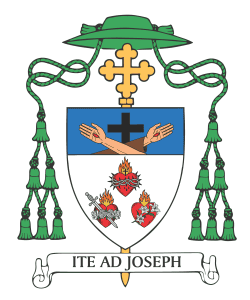
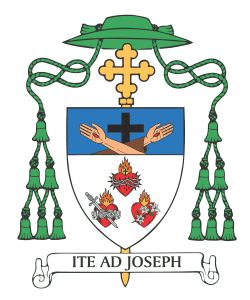
Ite ad Ioseph
Latin Vulgate of Genesis 41:55
“Ite ad Ioseph; et quidquid ipse vobis dixerit, facite.” (Go to Joseph; and whatever he says to you, do.)
The motto “Go to Joseph” comes directly from the Book of Genesis, specifically Genesis 41:55. During the famine in Egypt, when the people cried to Pharaoh for food, he answered: “Go to Joseph; what he says to you, do.”
This refers to Joseph, whom Pharaoh had appointed to oversee the storage and distribution of grain.
I. Spiritual interpretations, Fathers of the Church
Across Christian tradition, this moment has been read not just historically, but symbolically, especially as a foreshadowing of Christ and, later, of St. Joseph.
Joseph as a type of Christ
St. Augustine of Hippo
“Joseph, sold by his brethren, was a type of Christ… humbled, then exalted, and made the dispenser of grain to the nations.” “City of God,” Book XVI, Ch. 39
St. Augustine explicitly connects Joseph’s humiliation and later role as provider to Christ, who feeds the nations spiritually. Joseph is a figure pointing to Christ. Just as people had to go to Joseph to receive bread in time of famine, humanity must go to Christ for the “bread of life.”
Meaning: Spiritual hunger (sin, separation from God) is satisfied only through Christ.
The famine as spiritual hunger
St. John Chrysostom
“Do you see how God turns all things to good?… He made him lord of Egypt, so that he might relieve the famine, not of Egypt alone but of all the world.” “Homilies” on Genesis, 63.
St. John Chrysostom speaks literally of famine, and his broader homiletic method applies it morally. God provides through Joseph what humanity lacks, prefiguring spiritual nourishment. He interpreted the famine as a symbol of the human soul deprived of truth and grace.
Meaning: Without God, the soul experiences a kind of famine; turning to God’s chosen servant leads to restoration.
Obedience: “Do whatever he tells you”
St. Gregory the Great
“We must consider Joseph… who, when he had received power, used it not for pride but for service… that those who were subject to him might live.” Moralia in Job, Book I, Ch. 35
St. Gregory emphasizes that life comes through rightly ordered obedience to God’s appointed servant, echoing Pharaoh’s command. The Pharaoh’s instruction, do whatever he tells you, highlights obedience.
Meaning: Divine grace is received not just by seeking, but by obeying God’s will as communicated through His servants.
II. St. Joseph as a model of providence and stewardship
St. Ambrose
“Joseph gathered the grain not for himself but for the people… He foresaw the future and prepared remedies for the famine.” On Joseph (De Joseph), Ch. 8
St. Ambrose explicitly reads Joseph as a model of foresight, that is, spiritually making preparation in virtue and grace in times of need.
Meaning: The spiritual life requires foresight, storing up grace, virtue, and faith before times of trial.
“Go to Joseph” applied to St. Joseph
St. Bernardine of Siena
“As Pharaoh said, ‘Go to Joseph,’ so now the Lord seems to say to us: go to Joseph… for he is the dispenser of heavenly treasures.” Sermons of St. Bernardine of Siena, On St. Joseph
Meaning: Just as Egypt went to Joseph for material bread, Christians are encouraged to turn to St. Joseph for intercession and help in spiritual and temporal needs.
Scholastic Theological sources
St. Thomas Aquinas
St. Thomas does not comment extensively on Genesis 41:55 itself, but he explicitly treats Joseph as a TYPE OF CHRIST: “Joseph… was sold by his brethren and afterwards became ruler over Egypt… in this he prefigured Christ, who was sold and afterwards became Lord of all.” – “Summa Theologiae,” III, q. 59, a. 6 (ad 3)
Spiritual Meaning: St. Thomas continues the patristic line; Joseph distributes temporal bread; Christ distributes eternal life. The “Go to Joseph” command thus foreshadows “Go to Christ.”
St. Bernard of Clairvaux

St. Bernard does not give a line-by-line Genesis commentary, but in his Marian theology he parallels obedience formulas: “Whatever He shall say to you, do.” “Sermons on the Song of Songs,” Sermon 2. St. Bernard links this Johannine phrase (John 2:5) to the broader biblical pattern of obedience, including Pharaoh’s command in Genesis.
Spiritual Meaning: St. Bernard sees a recurring divine pedagogy: salvation comes through obedient listening to God mediated through chosen persons.
St. Bonaventure
St. Bonaventure explicitly reads Joseph mystically: “Joseph is the provider of grain, the savior of the people in famine… a figure of Christ who refreshes the hungry soul.” “Collations on the Six Days,” Collatio XV
Spiritual Meaning: The famine becomes the soul’s longing; Joseph (type of Christ) feeds with divine wisdom.
St. Albert the Great
“In Joseph is signified Christ… who opens the storehouses of grace to those who come to Him.” “Commentary on Genesis” (on Gen 41)
Spiritual Meaning: The “storehouses” of Egypt become a symbol of sacramental grace entrusted to Christ.
St. Bernardino of Siena
“To St. Joseph is given, as it were, the key of the treasures of the Kingdom… Therefore, it is said: ‘Go to Joseph.” “Sermones de Sanctis,” Sermon 49
Spiritual Meaning: From Joseph of Egypt to St. Joseph as heavenly patron and intercessor.
III. Official Church & Liturgical Tradition
Papal teaching: Pope Pius IX
St. Joseph is declared Patron of the Universal Church (1870). The faithful are encouraged to have recourse to St. Joseph in all needs. While not quoting the phrase explicitly in the decree Quemadmodum Deus, the entire devotion is built on the “Go to Joseph” principle already widespread.
Pope Leo XIII – explicit usage
“Thus, in Joseph… heads of families have a model… Let all, then, have recourse to Joseph.” “Quamquam Pluries” (1889) Leo XIII universalizes Ite ad Ioseph as a directive for the whole Church.
Litany of St. Joseph (approved 1909)
From the official litany: “Joseph most prudent… Joseph most strong… Terror of demons…” The repeated invocation structurally embodies “Go to Joseph” as prayer.
Roman Missal / Feast of St. Joseph (March 19)
In the liturgy of Feast of Saint Joseph: Joseph is presented as guardian, provider, and faithful servant. The readings often connect to divine stewardship and obedience. The liturgy places St. Joseph on the salvific pattern seen in Genesis: entrusted with care for God’s people.
Modern papal teaching: Pope John Paul II
“After Mary, Joseph is the one most closely associated with the mystery of salvation.” “Redemptoris Custos,” §1 This reinforces the tradition: going to Joseph means approaching one uniquely entrusted with Christ.
IV. Capuchin Franciscan Tradition
Saint Joseph occupies a privileged place in the spirituality of the Order of Friars Minor Capuchin because his life perfectly reflects the Franciscan ideals of humility, poverty, obedience, and loving service. The Capuchins, as a reform branch of the Franciscan family inspired by Saint Francis of Assisi, seek to live the Gospel in simplicity and trust in divine providence. St. Joseph embodies these virtues in a hidden yet profound way. He worked with his hands, protected the Holy Family, and faithfully accepted God’s will without seeking recognition or power.
This devotion was deepened theologically by the great Capuchin theologian and Doctor of the Church, Saint Lawrence of Brindisi. In his preaching and theological writings, Lawrence emphasized what later scholars call the “Incarnational Circle.” This idea teaches that God’s plan centers entirely on the Incarnation of Christ: everything comes from God through Christ, and all creation is called back to God through Christ. Within this circle, Mary and Joseph hold unique places because they were intimately united to the mystery of the Word made flesh. Joseph was not merely a guardian in a practical sense; he was providentially chosen to participate personally in the mystery of salvation by protecting and nurturing the Incarnate Son of God.
 This theology harmonizes deeply with Franciscan anthropology and theology, especially the Franciscan emphasis on the goodness and dignity of creation. Franciscan thinkers such as John Duns Scotus taught that the Incarnation was not simply a response to sin but the central purpose of creation itself. Humanity is therefore understood relationally and lovingly, created for communion with God in Christ. St. Joseph’s humble, relational, and self-giving life becomes an ideal Franciscan image of redeemed humanity: a man who lives entirely for Christ, in simplicity, love, and faithful service.
Many Capuchin saints and blesseds were known for a strong devotion to Saint Joseph. Some especially notable examples include:
- Saint Joseph of Leonessa — naturally had a profound devotion to his patron saint, St. Joseph, and promoted confidence in him through preaching and penance.
- Saint Pio of Pietrelcina — frequently invoked St. Joseph, encouraged devotion to him, and spoke of his protection for families and workers.
- Blessed Solanus Casey — had a tender devotion to St. Joseph and often recommended trust in his intercession.
- Saint Conrad of Parzham — practiced a quiet, deeply Josephite spirituality centered on humility and service.
- Saint Felix of Cantalice — promoted devotion to the Holy Family, especially Jesus, Mary, and Joseph.
- Saint Lawrence of Brindisi — preached often on the Incarnation and honored St. Joseph in his theological writings.
- Saint Leopold Mandić — entrusted his ministry and penitents to St. Joseph’s care.
- Saint Ignatius of Laconi — was known for simple but intense devotion to St. Joseph and the Holy Family.
- Blessed Leopold of Alpandeire — frequently prayed to St. Joseph and promoted confidence in his fatherly help.
- Saint Francis Mary of Camporosso — had a strong devotion to St. Joseph alongside devotion to Mary and the Eucharist.
The Capuchin tradition as a whole developed a strong spirituality of the Holy Family, poverty, work, humility, and hidden service virtues closely associated with Saint Joseph.
St. Lawrence of Brindisi
The phrase from Genesis 41:55, “Ite ad Ioseph” (“Go to Joseph”), is used in a spiritual and devotional sense in the writings of St. Lawrence of Brindisi to refer to St. Joseph, the foster father of Jesus. St. Lawrence, a Capuchin Franciscan and Doctor of the Church, used this phrase to promote devotion to St. Joseph, drawing a parallel
between the Old Testament Joseph who provided grain and the New Testament Joseph who guarded Jesus, the “Living Bread.”
The Source: St. Lawrence of Brindisi included these reflections in his homilies/sermons on St. Joseph.
The Quote (Paraphrased/Summary of Thought): St. Lawrence noted that Pharaoh exalted the Old Testament Joseph to save the kingdom from famine. He then parallelled this, saying in effect that for the salvation of the world, God elevated St. Joseph, who protected Christ—the true bread of life.
Significance: St. Lawrence of Brindisi argued that St. Joseph holds a unique, superior place in the heavenly hierarchy—following Jesus and Mary—due to his role as foster father. Just as the Egyptians were told to go to Joseph to receive bread, St. Lawrence encourages Christians to “Go to Joseph” to receive grace, protection, and intercession, as he is the guardian of the Church (the Mystical Body of Christ). It implies a call to imitate St. Joseph’s humility, silence, obedience, and trust in God’s providence. St. Lawrence emphasized that Joseph provides spiritual sustenance, acting as a “spiritual father” who leads souls closer to Jesus and Mary.
Note: The 15-volume set of St. Lawrence’s writings, specifically his four sermons on St. Joseph, contain these detailed typological interpretations where he links the Old Testament patriarch to the husband of Mary.
Ite ad Ioseph
Vulgata latina de Génesis 41:55
«Ite ad Ioseph; et quidquid ipse vobis dixerit, facite.»
(Id a José; y haced todo lo que él os diga.)
≪Cuando todo Egipto comenzo a sufrir el hambre, el pueblo clamo al faraon pidiendo alimento. Entonces el Faraon dijo a todos los egipcios: “Id a Jose y haced lo que el os diga”≫.
 El lema ≪Id a Jose≫ proviene directamente del Libro del Genesis, concretamente de Genesis 41:55. Durante la hambruna en Egipto, cuando el pueblo clamo al Faraon pidiendo comida, el respondio: ≪Id a Jose; haced lo que el os diga≫. Esto se refiere a Jose, a quien el faraon habia nombrado para supervisar el almacenamiento y la distribucion del grano.
I. Interpretaciones espirituales, Padres de la Iglesia
A lo largo de la tradicion cristiana, este momento se ha interpretado no solo historicamente, sino tambien simbolicamente, especialmente como un presagio de Cristo y, mas tarde, de San Jose.
José como tipo de Cristo
San Agustín de Hipona
≪Jose, vendido por sus hermanos, era un tipo de Cristo… humillado, luego exaltado, y convertido en el dispensador de grano a las naciones≫. La Ciudad de Dios, Libro XVI, cap. 39
San Agustin relaciona explicitamente la humillacion de Jose y su posterior papel como proveedor con Cristo, quien alimenta espiritualmente a las naciones. Jose es una figura que apunta a Cristo. Asi como la gente tenia que acudir a Jose para recibir pan en tiempos de hambruna, la humanidad debe acudir a Cristo para obtener el ≪pan de vida≫.
Significado: El hambre espiritual (el pecado, la separacion de Dios) solo se sacia a traves de Cristo.
El hambre como hambre espiritual
San Juan Crisóstomo
≪.Veis como Dios convierte todas las cosas en bien?… Lo hizo senor de Egipto, para que pudiera aliviar el hambre, no solo de Egipto, sino de todo el mundo≫. Homilias sobre el Genesis, 63.
 San Juan Crisostomo habla literalmente de la hambruna, y su metodo homiletico mas amplio la aplica moralmente. Dios provee a traves de Jose lo que le falta a la humanidad, prefigurando el alimento espiritual. Interpreto la hambruna como un simbolo del alma humana privada de la verdad y la gracia.
Significado: Sin Dios, el alma experimenta una especie de hambruna; volverse hacia el siervo elegido de Dios conduce a la restauracion.
Obediencia: «Haced todo lo que él os diga»
San Gregorio Magno
≪Debemos considerar a Jose… quien, cuando recibio poder, lo utilizo no para el orgullo sino para el servicio… para que vivieran aquellos que estaban sometidos a el≫. Moralia in Job, Libro I, cap. 35
San Gregorio subraya que la vida proviene de la obediencia debidamente ordenada al siervo designado por Dios, haciendose eco de la orden del faraon. La instruccion del faraon, ≪haced lo que el os diga≫, pone de relieve la obediencia.
Significado: La gracia divina no se recibe solo buscandola, sino obedeciendo la voluntad de Dios tal y como se comunica a traves de sus siervos.
- San José como modelo de providencia y administración
San Ambrosio
≪Jose recogio el grano no para si mismo, sino para el pueblo… Previo el futuro y preparo remedios para la hambruna≫. Sobre Jose (De Joseph), cap. 8
San Ambrosio interpreta a Jose como un modelo de prevision, es decir, de preparacion espiritual.
Significado: La vida espiritual requiere prevision, acumulando gracia, virtud y fe antes de tiempos de prueba.
- «Id a José», aplicado a San José
San Bernardino de Siena
≪Asi como el faraon dijo: “Id a Jose”, asi ahora el Senor parece decirnos: id a Jose… pues el es el dispensador de los tesoros celestiales≫. Sermones de San Bernardino de Siena, Sobre San Jose Significado: Al igual que Egipto acudio a Jose en busca de pan material, se anima a los cristianos a recurrir a San Jose en busca de intercesion y ayuda en sus necesidades espirituales y temporales.
- Fuentes teológicas escolásticas
- Santo Tomás de Aquino
Santo Tomas no comenta extensamente Genesis 41, 55 en si, pero trata explicitamente a Jose como un TIPO DE CRISTO: ≪Jose… fue vendido por sus hermanos y despues se convirtio en gobernante de Egipto… en esto prefiguro a Cristo, que fue vendido y despues se convirtio en Senor de todo≫. – Summa Theologiae, III, q. 59, a. 6 (ad 3)
Significado espiritual: Santo Tomas continua la linea patristica; Jose distribuye el pan temporal; Cristo distribuye la vida eterna. La orden ≪Id a Jose≫ presagia asi ≪Id a Cristo≫.
- San Bernardo de Claraval
San Bernardo no ofrece un comentario versiculo por versiculo del Genesis, pero en su teología mariana establece un paralelismo con las formulas de obediencia: ≪Haced todo lo que El os diga≫. Sermones sobre el Cantar de los Cantares, Sermon 2. San Bernardo vincula esta frase joanica (Juan 2, 5) con el patron biblico mas amplio de la obediencia, incluyendo la orden del faraon en el Genesis.
Significado espiritual: San Bernardo ve una pedagogia divina recurrente: la salvacion llega a traves de la escucha obediente a Dios mediada por personas elegidas.
- San Buenaventura
San Buenaventura interpreta a Jose de forma mistica: ≪Jose es el proveedor de trigo, el salvador del pueblo en tiempos de hambruna… una figura de Cristo que sacia el alma hambrienta≫. Colaciones sobre los seis dias, Colacion XV
Significado espiritual: La hambruna se convierte en el anhelo del alma; Jose (tipo de Cristo) la alimenta con sabiduria divina.
- San Alberto Magno
≪En Jose se simboliza a Cristo… que abre los almacenes de la gracia a quienes acuden a El≫. Comentario sobre el Genesis (sobre Genesis 41)
Significado espiritual: Los ≪almacenes≫ de Egipto se convierten en un simbolo de la gracia sacramental confiada a Cristo.
- San Bernardino de Siena
≪A San Jose se le ha dado, por asi decirlo, la llave de los tesoros del Reino… Por eso se dice: “Id a Jose”≫. Sermones de Sanctis, Sermon 49
Significado espiritual: De Jose de Egipto a San Jose como patron celestial e intercesor.
III. Tradicion oficial de la Iglesia y liturgica
- Enseñanza papal: el papa Pío IX
San Jose es declarado Patrono de la Iglesia Universal (1870). Se anima a los fieles a recurrir a San Jose en todas sus necesidades. Aunque no se cita explicitamente la frase en el decreto Quemadmodum Deus, toda la devocion se basa en el principio ≪Acudid a Jose≫, ya muy extendido.
- Papa León XIII — uso explicito
≪Asi, en Jose… los jefes de familia tienen un modelo… Que todos, pues, recurran a Jose≫. Quamquam Pluries (1889) Leon XIII universaliza Ite ad Ioseph como directriz para toda la Iglesia.
- Letanía de San José (aprobada en 1909)
De la letania oficial: ≪Jose, el mas prudente… Jose, el mas fuerte… Terror de los demonios…≫ La invocacion repetida plasma estructuralmente el ≪Acude a Jose≫ como oracion.
- Misal Romano / Fiesta de San José (19 de marzo)
En la liturgia de la fiesta de San Jose: Jose se presenta como guardian, proveedor y siervo fiel. Las lecturas suelen relacionarse con la administracion divina y la obediencia. La liturgia situa a San Jose en el modelo salvifico que se ve en el Genesis: a quien se le ha confiado el cuidado del pueblo de Dios.
- Enseñanza papal moderna: Papa Juan Pablo II
≪Despues de Maria, Jose es el mas estrechamente asociado al misterio de la salvacion≫. Redemptoris Custos, §1. Esto refuerza la tradicion: acudir a Jose significa acercarse a quien tiene un encargo único respecto a Cristo.
- Tradicion franciscana capuchina
San Jose ocupa un lugar privilegiado en la espiritualidad de la Orden de los Hermanos Menores Capuchinos porque su vida refleja a la perfeccion los ideales franciscanos de humildad, pobreza, obediencia y servicio amoroso. Los capuchinos, como rama reformista de la familia franciscana inspirada en San Francisco de Asis, buscan vivir el Evangelio con sencillez y confianza en la divina providencia. San Jose encarna estas virtudes de una manera oculta pero profunda. Trabajo con sus manos, protegio a la Sagrada Familia y acepto fielmente la voluntad de Dios sin buscar reconocimiento ni poder.
Esta devocion fue profundizada teologicamente por el gran teologo capuchino y Doctor de la Iglesia, San Lorenzo de Brindisi. En su predicacion y en sus escritos teologicos, Lorenzo hizo hincapie en lo que los estudiosos posteriores denominan el ≪Circulo de la Encarnacion≫. Esta idea ensena que el plan de Dios se centra por completo en la Encarnacion de Cristo: todo proviene de Dios a traves de Cristo,
y toda la creacion es llamada a volver a Dios a traves de Cristo. Dentro de este circulo, Maria y Jose ocupan un lugar unico porque estaban intimamente unidos al misterio del Verbo hecho carne. Jose no fue meramente un guardian en un sentido practico; fue providencialmente elegido para participar personalmente en el misterio de la salvacion al proteger y criar al Hijo de Dios encarnado.
Esta teologia armoniza profundamente con la antropologia y la teologia franciscanas, especialmente con el enfasis franciscano en la bondad y la dignidad de la creacion. Pensadores franciscanos como Juan Duns Escoto ensenaron que la Encarnacion no era simplemente una respuesta al pecado, sino el proposito central de la creacion misma. La humanidad se entiende, por tanto, de manera relacional y amorosa, creada para la comunion con Dios en Cristo. La vida humilde, relacional y abnegada de San
Jose se convierte en una imagen franciscana ideal de la humanidad redimida: un hombre que vive enteramente para Cristo, en sencillez, amor y servicio fiel.
Muchos santos y beatos capuchinos fueron conocidos por su fuerte devocion a San Jose. Algunos ejemplos especialmente notables incluyen:
- San Jose de Leonessa: sentia una profunda devocion natural por su santo patron, San Jose, y fomentaba la confianza en el a traves de la predicacion y la penitencia.
- San Pio de Pietrelcina: invocaba con frecuencia a San Jose, animaba a la devocion hacia el y hablaba de su proteccion para las familias y los trabajadores.
- Beato Solanus Casey: sentia una tierna devocion por San Jose y solia recomendar la confianza en su intercesion.
- San Conrado de Parzham — practicaba una espiritualidad silenciosa y profundamente josefina, centrada en la humildad y el servicio.
- San Felix de Cantalice — promovio la devocion a la Sagrada Familia, especialmente a Jesus, Maria y Jose.
- San Lorenzo de Brindisi — predicaba a menudo sobre la Encarnacion y honraba a San Jose en sus escritos teologicos.
- San Leopoldo Mandić: confio su ministerio y a sus penitentes al cuidado de San Jose.
- San Ignacio de Laconi: era conocido por su sencilla pero intensa devocion a San Jose y a la Sagrada Familia.
- Beato Leopoldo de Alpandeire: rezaba con frecuencia a San Jose y promovia la confianza en su ayuda paternal.
- San Francisco Maria de Camporosso — tenia una gran devocion por San Jose, junto con la devoción a Maria y a la Eucaristia.
La tradicion capuchina en su conjunto desarrollo una fuerte espiritualidad de la Sagrada Familia, la pobreza, el trabajo, la humildad y las virtudes del servicio oculto, estrechamente asociadas a San Jose.
- San Lorenzo de Brindisi
La frase de Genesis 41,55, ≪Ite ad Ioseph≫ (≪Id a Jose≫), se utiliza en un sentido espiritual y devocional en los escritos de San Lorenzo de Brindisi para referirse a San Jose, el padre adoptivo de Jesus. San Lorenzo, franciscano capuchino y Doctor de la Iglesia, utilizo esta frase para promover la devocion a San Jose, estableciendo un paralelismo entre el Jose del Antiguo Testamento, que proporciono el grano, y el Jose del Nuevo Testamento, que protegio a Jesus, el ≪Pan de Vida≫.
La fuente: San Lorenzo de Brindisi incluyo estas reflexiones en sus homilias y sermones sobre San Jose.
La cita (parafraseada/resumen del pensamiento): San Lorenzo senalo que el faraon exalto al Jose del Antiguo Testamento para salvar al reino de la hambruna. A continuacion, establecio un paralelismo con esto, diciendo en efecto que, para la salvacion del mundo, Dios elevo a San Jose, quien protegio a Cristo, el verdadero pan de vida.
Significado: San Lorenzo de Brindisi sostenia que San Jose ocupa un lugar unico y privilegiado en la jerarquia celestial —solo por detras de Jesus y Maria— debido a su papel como padre adoptivo. Al igual que a los egipcios se les dijo que acudieran a Jose para recibir pan, San Lorenzo anima a los cristianos a ≪acudir a Jose≫ para recibir gracia, proteccion e intercesion, ya que el es el guardian de la Iglesia (el Cuerpo Mistico de Cristo). Esto implica una llamada a imitar la humildad, el silencio, la obediencia y la confianza en la providencia de Dios de San Jose. San Lorenzo enfatizo que Jose proporciona sustento espiritual, actuando como un ≪padre espiritual≫ que acerca las almas a Jesus y Maria.
Nota: La coleccion de 15 volumenes de los escritos de San Lorenzo, concretamente sus cuatro sermones sobre San Jose, contienen estas detalladas interpretaciones tipologicas en las que vincula al patriarca del Antiguo Testamento con el esposo de Maria.
 Explanation