




“Lent is a new beginning, a path leading to the certain goal of Easter, Christ’s victory over death.”
 These words from Pope Francis should resonate with all Catholics and serve to remind us that the coming Liturgical Season has great significance and meaning.
During Lent, we are asked to devote ourselves to seeking the Lord in prayer and reading Scripture, to service by giving alms, and to practice self-control through fasting.
Lent lasts for 40 days – excluding Sundays – from Ash Wednesday (Feb. 26) to the evening Mass of the Lord’s Supper on Holy Thursday, which this year falls on April 9. It is a reminder of Christ’s 40 days of temptation and fasting in the desert, and of Israel’s 40 years of wandering in the desert.
This penitential season of fasting, alms-giving, and special prayer is like a spiritual cleansing and renewal to draw closer to God.
The key to fruitful observance of these practices is to recognize their link to baptismal renewal. We recall those waters in which we were baptized into Christ’s death, died to sin and evil, and began new life in Christ.
Joshua Mazrin, Diocese of Venice Director of Evangelization, said Lent is the ideal time to focus on becoming “A Disciple of Christ.”
“Discipleship is truly following the Lord,” Mazrin explained. “For Lent Jesus gives us an example by first going to the desert to fast and pray.” Christ teaches us:
- To fast in order to grow in physical discipline. Fast intentionally – not just because it’s an old written down tradition, but in order to grow in mastery over your flesh and your passions;
- To give alms in order to have detachment. We don’t give alms just because it’s nice. We give alms to help those in need as well as to not have an inordinate attachment to physical possessions;
- To pray. We pray to grow in our relationship with God and as an act of humility. Humility helps us imitate Christ and a great example of humility is Mary.
Mazrin went on to explain that there are some practical things one can do to be “A Disciple of Christ” during Lent.
“Give up something specific for Lent not just to give something up, but something that will challenge you to grow in an area that will be beneficial to you and your relationship with God;” he continued. “Pray more intentionally. Meditate on purpose. Pray the rosary, go to Mass an extra time during the week, pick up your bible and actually try to go deeper in it! Give alms, volunteer your time, try to see things from the perspective of someone less fortunate than yourself.”
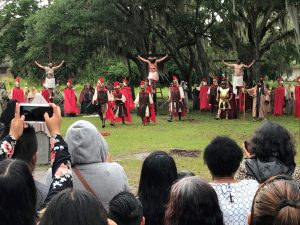 During Lent, it is common to participate in a retreat or the Stations of the Cross, allowing the opportunity for one to refocus on the Lord in different ways. Check with your local Parish for these and other Lenten activities.
The precept of confessing grave sins and receiving Holy Communion at least once during the Lenten Season merits a reminder to the Faithful. To facilitate this requirement, every Parish in the Diocese of Venice will be open with a confessor present 4 to 8 p.m., Friday, April 3, and 9 a.m.to noon, Saturday, April 4. Additional times for the Sacrament are also offered so that the Faithful may find ample opportunity to receive God’s mercy. Parishes also combine to have an evening prayer service with many priests present to offer the Sacrament of Reconciliation. Again, check with your local Parish for additional reconciliation times.
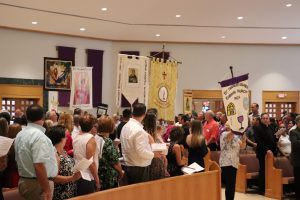
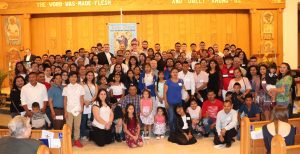
During Lent, a group of catechumens and candidates will be coming into the full communion with the Church. Bishop Frank J. Dewane will preside over the Rite of Election, at 2:30 p.m., on the first Sunday of Lent, March 1, at Epiphany Cathedral in Venice.
This annual tradition is a formal Rite during which catechumens are presented and their names are entered into the Book of Elect. This year, 112 catechumens will be joined by an additional 185 candidates who will also participate in the formal ceremony and be recognized during the celebration for answering the call to their continuing conversion.
Dates of note
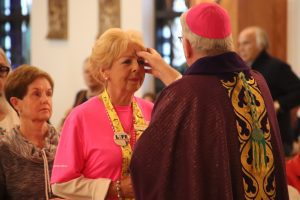
In addition to Ash Wednesday, Feb. 26, where one can receive ashes, there are several other key dates of note on the Liturgical Calendar.
On the Solemnity of St. Joseph, Spouse of the Blessed Virgin Mary, March 19, Bishop Dewane will be celebrating 8 a.m., Mass at St. Joseph Parish, 3100 26th Ave. W., Bradenton, and then 12:30 p.m. Mass in Italian at Epiphany Cathedral, 3350 Tampa Ave. W., Venice. The Mass in Venice is at the invitation of the Italian-American Club and will include a traditional blessing of the bread and procession.
On the Solemnity of the Annunciation of the Lord, March 25, many Parishes add additional Mass to accommodate this day. The day also marks the start of the annual Novena for Mass for Life, a special opportunity to meditate on the progressive development of Our Lord in His mother’s womb. The hope is that this meditation will help people to reflect on the sanctity of all human life, from fertilization/conception to birth and throughout life until natural death, regardless of age or condition.
Palm Sunday of the Passion of the Lord, April 5, is the day the Church remembers Christ’s entrance into Jerusalem. The commemoration with the blessing of the palms and procession, is a ritual action that marks our own entry into Holy Week.
During Holy Week is the annual Chrism Mass, 10:30 a.m., April 7, at Epiphany Cathedral. The Chrism Mass is the largest gathering of priests in the Diocese and a time when they join Bishop Dewane in a celebration of the unity of the priesthood and when the holy oils used in the Sacraments are blessed and consecrated.
For more information about Lent and related activities taking place in the Diocese, or at local Parishes, please visit www.dioceseofvenice.org.
REGULATIONS ON FASTING AND ABSTINENCE
Ash Wednesday, Feb. 26, 2020, and Good Friday, April 10, are days of fast and abstinence. All Fridays of Lent are also days of abstinence from meat.
Fasting is to be observed on Ash Wednesday and Good Friday by all Catholics between the ages of 18 years and 59 years (inclusive). On a fast day one full meal is allowed. Two smaller meals, sufficient to maintain strength, may be taken according to each one’s needs, but together they should not equal another full meal. Eating between meals is not permitted, but liquids are allowed. If possible, the fast on Good Friday is to continue until the Easter Vigil (on Holy Saturday night) as the “paschal fast” is to honor the suffering and death of the Lord Jesus, and to prepare ourselves to share more fully and to celebrate more readily His Resurrection.
Abstinence from meat is to be observed by all Catholics who are 14 years of age and older on Ash Wednesday and all Fridays of Lent, including Good Friday.
Note: If a person is unable to observe the above regulations due to ill health or other serious reasons, they are urged to practice other forms of self-denial that are suitable to their condition.