




It is that time of year again! The weather turns hot and humid across Florida beginning in June and residents turn a wary eye toward the Atlantic Ocean, Caribbean Sea and Gulf of Mexico for the development of potentially hazardous hurricanes.
The 2026 Atlantic Hurricane Season starts on Monday, June 1, and now is the time for all to make sure they are prepared and ready should a tropical system threaten. Emergency managers stress that preparation and vigilance are keys to safety and security from the power of nature.
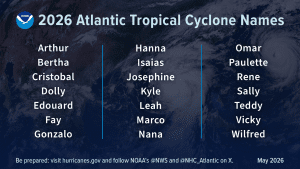 Forecasters with National Oceanic and Atmospheric Administration (NOAA) are expecting a below-normal hurricane season for the Atlantic basin this year. NOAA, citing an unusually strong El Niño, is forecasting a total of 8-14 named storms (winds in excess of 39 mph), 3-6 hurricanes (winds in excess of 74 mph), and 1-3 major hurricanes (Category 3 or higher with winds in excess of 110 mph). An average season has 14 named storms with seven hurricanes, including three major hurricanes. Therefore, upon hearing the names Authur, Bertha, Cristobal, and Dolly, everyone should pay attention.
Experts say caution is encouraged as even in the quietest of hurricane seasons, a destructive storm can strike anywhere and at any time. The most poignant example was in 1992 when there were only seven named storms. It is the year that Hurricane Andrew hit South Florida with Category 5 winds (165 mph), causing billions in damage, including in the southern parts of the Diocese of Venice.
The Diocese of Venice is familiar with the destructive force of these storms, such as Hurricanes Helene and Milton (2024), Ian (2022), and Irma (2017). Other storms of note in recent memory were Hurricane Charley in 2004 and then Hurricanes Katrina and Wilma in 2005.
A detailed Diocesan Disaster Response Plan is in place for all Parishes, Catholic schools and other Diocesan entities. This plan includes preparation and response to disasters.
Preparedness
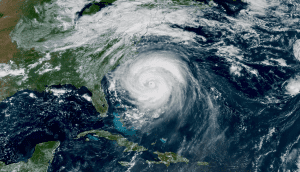 To best prepare for a storm, having an emergency plan is crucial. Simple things people need to know or do, include: knowing what evacuation zone you live in; having more than one evacuation route; having key documents ready in a waterproof container; knowing where the nearest emergency evacuation shelter is; and having a disaster supply kit with essentials, including enough food and water for a minimum of three to seven days. For a list of the essentials for a disaster supply kit, please visit www.floridadisaster.org/supplykit.htm.
To help encourage the citizens of the Florida to buy their emergency supplies now, the State of Florida has made permanent the tax-free “holiday” on emergency disaster supplies throughout the year. This means many key supplies are tax free, including: batteries, flashlights, generators and much more. All can be purchased at anytime ahead of the storm, tax free. If you have a Disaster Supply Kit that went unused in 2025, go through it to ensure all items are fresh and the batteries are still good.
Anyone who has a medical or transportation issue and may need assistance evacuating, such as the elderly or handicapped, must contact their county emergency management office to register for evacuation help, or call 511 for assistance. This system is usually updated each year so registering in the past will not guarantee being on a list for 2026.
Another key action is to make sure insurance is up-to-date, and photographs are taken of all valuables before the storm. Keep in mind that hurricane and flood insurance can take up to 30 days to go into effect, meaning buying insurance now will mean it could take until July, a month into the season, before the policy can be used.
Lastly, should you decided to evacuate, it is recommended to have multiple routes planned because, as many learned ahead of Irma, traffic will be a problem. This could mean leaving early or simply not going as far, but it is important to plan ahead on where you are going ahead of time. Officials discourage traveling out of state to avoid a hurricane but recommend going to the home of a friend/family member who lives out of the path of predicted storm surge and the most dangerous winds, and then only if you are ordered to evacuate or do not feel your home is safe enough.
By knowing what actions to take before the hurricane season begins, when a hurricane approaches and when the storm is in your area, as well as what to do after a hurricane leaves your area, you can minimize potential impact, and increase your chances of survival.
The following is a list of websites where you can learn more information about how you can be better prepared in the event disaster strikes.
National Hurricane Center: http://www.nhc.noaa.gov/prepare/ready.php
Federal Emergency Management Agency: http://www.ready.gov/hurricanes
Florida Division of Emergency Management: http://www.floridadisaster.org/dempublic.asp