




It is that time of year again! The weather turns hot and humid across Florida beginning in June and residents turn a wary eye toward the Atlantic Ocean, Caribbean Sea and Gulf of Mexico for the development of potentially hazardous hurricanes.
The 2026 Atlantic Hurricane Season starts on Monday, June 1, and now is the time for all to make sure they are prepared and ready should a tropical system threaten. Emergency managers stress that preparation and vigilance are keys to safety and security from the power of nature.
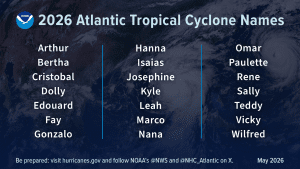 Forecasters with National Oceanic and Atmospheric Administration (NOAA) are expecting a below-normal hurricane season for the Atlantic basin this year. NOAA, citing an unusually strong El Niño, is forecasting a total of 8-14 named storms (winds in excess of 39 mph), 3-6 hurricanes (winds in excess of 74 mph), and 1-3 major hurricanes (Category 3 or higher with winds in excess of 110 mph). An average season has 14 named storms with seven hurricanes, including three major hurricanes. Therefore, upon hearing the names Authur, Bertha, Cristobal, and Dolly, everyone should pay attention.
Experts say caution is encouraged as even in the quietest of hurricane seasons, a destructive storm can strike anywhere and at any time. The most poignant example was in 1992 when there were only seven named storms. It is the year that Hurricane Andrew hit South Florida with Category 5 winds (165 mph), causing billions in damage, including in the southern parts of the Diocese of Venice.
The Diocese of Venice is familiar with the destructive force of these storms, such as Hurricanes Helene and Milton (2024), Ian (2022), and Irma (2017). Other storms of note in recent memory were Hurricane Charley in 2004 and then Hurricanes Katrina and Wilma in 2005.
A detailed Diocesan Disaster Response Plan is in place for all Parishes, Catholic schools and other Diocesan entities. This plan includes preparation and response to disasters.
Preparedness
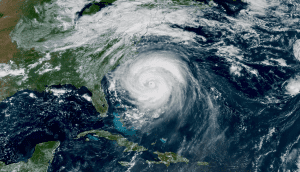 To best prepare for a storm, having an emergency plan is crucial. Simple things people need to know or do, include: knowing what evacuation zone you live in; having more than one evacuation route; having key documents ready in a waterproof container; knowing where the nearest emergency evacuation shelter is; and having a disaster supply kit with essentials, including enough food and water for a minimum of three to seven days. For a list of the essentials for a disaster supply kit, please visit www.floridadisaster.org/supplykit.htm.
To help encourage the citizens of the Florida to buy their emergency supplies now, the State of Florida has made permanent the tax-free “holiday” on emergency disaster supplies throughout the year. This means many key supplies are tax free, including: batteries, flashlights, generators and much more. All can be purchased at anytime ahead of the storm, tax free. If you have a Disaster Supply Kit that went unused in 2025, go through it to ensure all items are fresh and the batteries are still good.
Anyone who has a medical or transportation issue and may need assistance evacuating, such as the elderly or handicapped, must contact their county emergency management office to register for evacuation help, or call 511 for assistance. This system is usually updated each year so registering in the past will not guarantee being on a list for 2026.
Another key action is to make sure insurance is up-to-date, and photographs are taken of all valuables before the storm. Keep in mind that hurricane and flood insurance can take up to 30 days to go into effect, meaning buying insurance now will mean it could take until July, a month into the season, before the policy can be used.
Lastly, should you decided to evacuate, it is recommended to have multiple routes planned because, as many learned ahead of Irma, traffic will be a problem. This could mean leaving early or simply not going as far, but it is important to plan ahead on where you are going ahead of time. Officials discourage traveling out of state to avoid a hurricane but recommend going to the home of a friend/family member who lives out of the path of predicted storm surge and the most dangerous winds, and then only if you are ordered to evacuate or do not feel your home is safe enough.
By knowing what actions to take before the hurricane season begins, when a hurricane approaches and when the storm is in your area, as well as what to do after a hurricane leaves your area, you can minimize potential impact, and increase your chances of survival.
The following is a list of websites where you can learn more information about how you can be better prepared in the event disaster strikes.
National Hurricane Center: http://www.nhc.noaa.gov/prepare/ready.php
Federal Emergency Management Agency: http://www.ready.gov/hurricanes
Florida Division of Emergency Management: http://www.floridadisaster.org/dempublic.asp

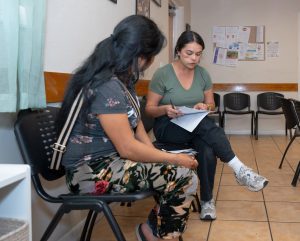
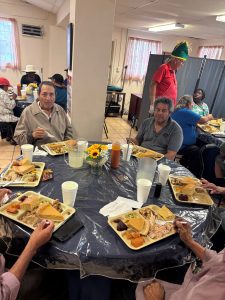
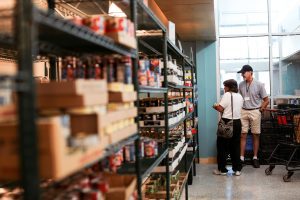
 Catholic Charities assisted more than 350,000 people in need, providing a wide range of services throughout the 10-county Diocese of Venice this year. The support of the faithful allowed Catholic Charities to meet the overwhelming demand for aid following the devastation caused by the double-barreled shot-gun approach of Hurricane Helene and Hurricane Milton, which collectively displaced tens of thousands of families across Florida. Additional services offered include food and housing assistance, counseling and mental health services, and programs for seniors and children. For example:
 Bishop Frank J. Dewane noted that the continued support of Catholic Charities by the faithful of Southwest Florida is inspirational and critical, “ensuring our brothers and sisters in Christ continue to receive the help and support they need. Please remember that every number represents a child, family or individual who relies on the support of Catholic Charities to get through a crisis. Catholic Charities does a tremendous job in providing programs that not only help in a crisis but assist in improving the daily lives of those they reach. Your support is appreciated and critical!”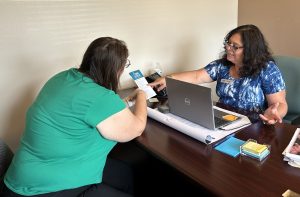
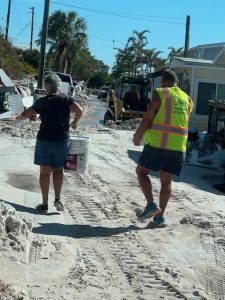
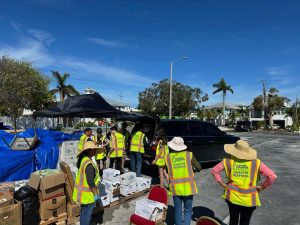
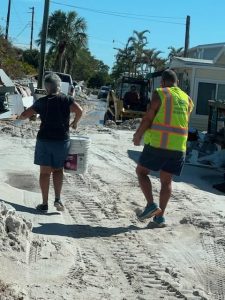
 That simple statement encompasses a broad spectrum of programs of Catholic Charities which has provided food, clothing, shelter and a network of support services to people of all ages, all races and nationalities, and all religious backgrounds. The organization brings substantial relief and support to the most vulnerable populations in Southwest Florida. Every day, Catholic Charities strives to feed the hungry, comfort the brokenhearted, and shelter the homeless as it works to change lives for the better.
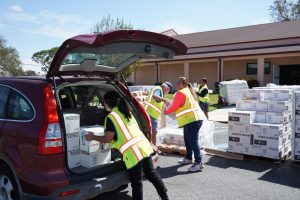
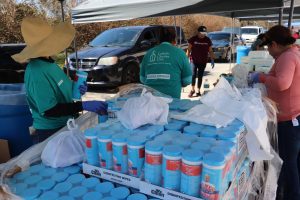
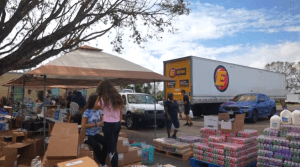 Catholic Charities’ disaster response team was prepared and quickly opened 11 disaster relief sites throughout the Diocese. Staff and volunteers distributed 2,504 tons of supplies to more than 112,000 people in the immediate aftermath. In addition, teams served hot meals to upwards of 22,000 with the assistance of 2,000 volunteers. Donors and community partners came through with donations and supplies that allowed Catholic Charities to respond swiftly.
 Bishop Frank J. Dewane noted that the support of Catholic Charities by the faithful of Southwest Florida is inspiring, as was witnessed in the aftermath of Hurricane Ian, and is critical to ensure “our brothers and sisters in Christ continue to receive the help and support they need. Please remember that every number represents a child, family or individual who relies on the support of Catholic Charities to get through a crisis. Catholic Charities does a wonderful job in providing programs that not only help in a crisis, but assist in improving daily the lives of those they reach.”
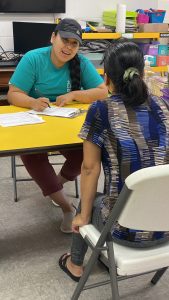 “Your gift makes an impact,” Gloria said. “It is because of donations like yours we were able to supply food and pantry services to 195,354 people, assist 1,513 with housing, offer support to 5,020 victims of human trafficking, help 4,660 people with behavioral health services, and provide 14,007 educational services to children and adults, all in one year.”
 The demand was great,” said Eddie Gloria, CEO of Catholic Charities DOV. “Catholic Charities stepped up to do what had to be done even as many of our staff and volunteers suffered losses from Ian.”
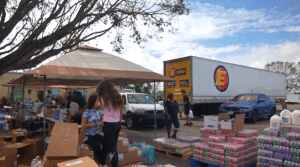 The basics of food and water were available at each site, some from donations of individuals, families, Parishes, non-profit groups and even corporations. The majority of what was distributed was in the form of FEMA Disaster Relief supplies, which included cases of bottled water and boxes of meals-ready-to-eat.
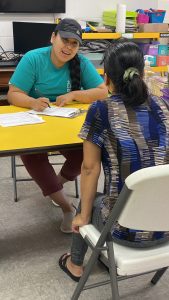 “We are past the first phase, which is responding to the immediate aftermath of this disaster,” Branam said. “Now we are focusing on helping people rebuild their lives. This means case management and support with getting people back into their homes whenever possible. Even if a family didn’t have serious damage in the storm, many had time off from work that they really could not afford. Others had damage they cannot afford to take care of, and still others need to relocate.”
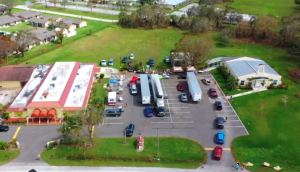 While Catholic Charities will always accept donations of cleaning supplies and food such as rice, beans and cooking oil, the real need is for financial donations, Gloria said.
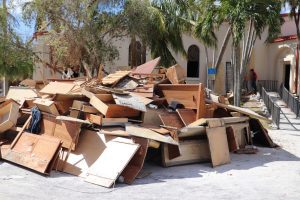 Debris removal at Ascension Parish and the San Damiano Monastery of Saint Clare on Fort Myers Beach is well underway. The property was inundated with more than 12 feet of storm surge from Hurricane Ian on Sept. 28, 2022.
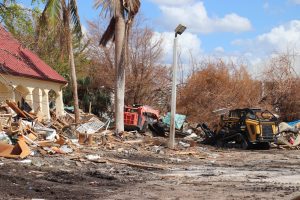 The property has no power or running water, so contractors brought their own generators to run some equipment. Additionally, crews are actively removing the remains of nine houses which littered the property after being pushed by the surge. The clearing of this debris will allow better access to the property which has been limited.
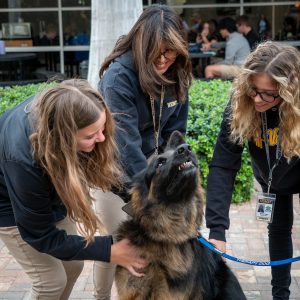 Furry friends are making special visits to the three Diocese of Venice Catholic Schools in Lee County following Hurricane Ian. The therapy dogs are visiting St. Andrew Catholic School in Cape Coral, St. Francis Xavier Catholic School in Fort Myers, as well as Bishop Verot Catholic High School, also in Fort Myers.
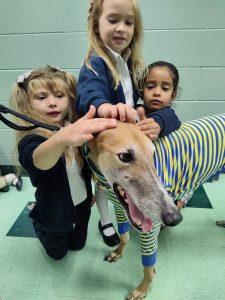 The first visit was to Bishop Verot on Oct. 19, 2022, where the dogs were brought to the school courtyard where students were able to pet and hug the dogs to their hearts content. These dogs also visited the elementary schools and are returning several days a week to ensure each student has time with the dogs.
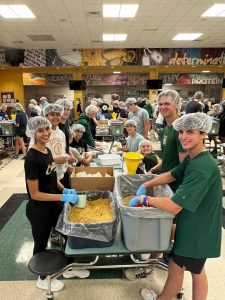 Members of the St. John Neumann Catholic High School Key Club joined students from other Naples-area schools to package 50,000 meals with the group Meals of Hope on Oct. 22, 2022. Typically, these packaged meals would be sent off to needy countries around the world, but because of the impact of Hurricane Ian, the food will remain in Collier County to help victims of the hurricane. The Key Club at Neumann is a service club which participates in a variety of projects helping people in need throughout the community.
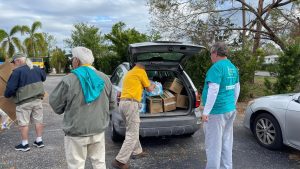 Catholic Charities, Diocese of Venice, Inc. is now providing water, ready-to-eat meals, baby items, hygiene kits, tarps, and other essential supplies for distribution in the parking lot behind the Ministry Center of St. Charles Borromeo Parish, 21505 Augusta Ave., Port Charlotte. The disaster distribution point opened on Oct. 19, 2022, and is open 9 a.m. to 1 p.m., Monday to Saturday, in the parking lot behind the Parish school, at Augusta Avenue and Gates Avenue. Catholic Charities is currently operating six disaster distribution sites, down from a peak of 10 in the immediate aftermath of Hurricane Ian. The locations change as the needs of the community and the response transitions to more of a recovery mode in different areas.
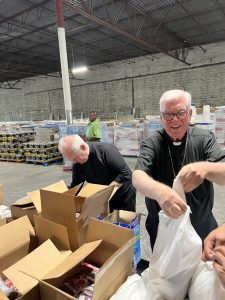 Bishop Dewane celebrated Mass on Oct. 8, 2022, at St. Katharine Drexel Parish in Cape Coral, a region hard hit by Ian’s harsh winds and storm surge. Many, 13 days after the storm, still had no power in their homes.
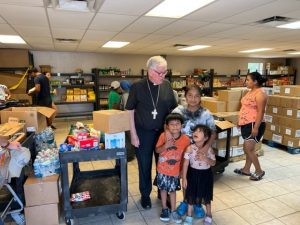 Immediately following the passage of Ian, Bishop Dewane began to visit the sites of destruction caused by the hurricane. It was on Oct. 6, 2022, when he was able to visit the hard-hit communities in Desoto and Hardee counties. Access to these areas was extremely limited by river flooding and the areas were under ongoing states of emergency.
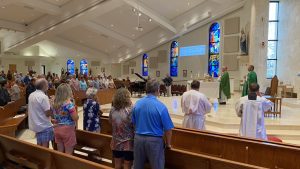 During his visit, Bishop Dewane spoke to families and offered several blessings for healing as they continued to suffer from the storm that had finally passed.
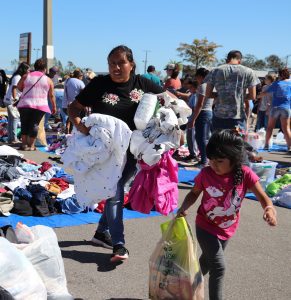 This outreach has been made possible by the direction of CEO Eddie Gloria, his team, volunteers and the guidance of Bishop Frank J. Dewane.
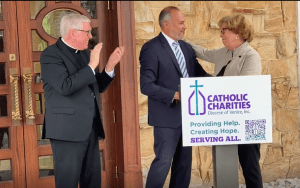 Catholic Charities USA President and CEO, Sister Donna Markham, OP, visited the Diocese of Venice on Oct. 12, 2022, to get an update on how the response is progressing.
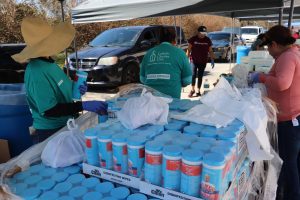 “Now it is your turn,” Sister said. “We are here with the enormous generosity of a lot of people, who have helped us by sending in donations (through the CCUSA website). We take every single dollar from our donors and ensure they will go directly to the people affected by a disaster. In this case, in what I hope will be more to come, is an initial check for humanitarian relief in the amount of $500,000.”
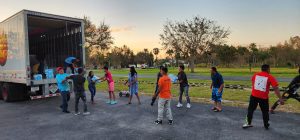 Arcadia was a site of total devastation. Many homes were damaged or destroyed by the fierce winds of Ian, but it was the flooding from the Peace River, which lazily flows through the western portion of the area that brought more destruction. The river rose to record levels and cut the city in half, that did most of the destruction.
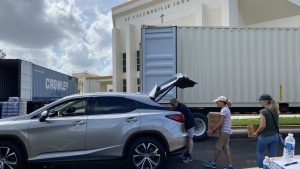 This is why the front parking lot of the Parish church, which sits on State Road 70, the main east-west road through the rural city, was a hive of activity as churches of all denominations brought clothing and emergency supplies for people to choose from.
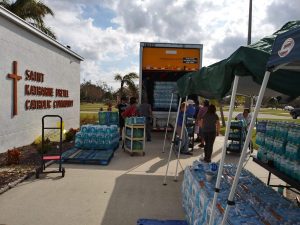 On the back side of the Parish church is the Catholic Charities disaster distribution site, which includes water, food, sunscreen, batteries, blankets, tarps, cleaning supplies and more. Trucks from all over resupply the site each day as the demand continues.
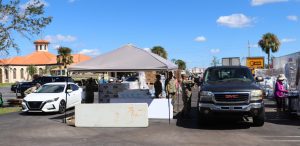 Since that time, Catholic Charities has set up 8 Hurricane Ian disaster response Points of Distribution (POD), helping to bring water, food and aid to those who need it. Arcadia, Cape Coral, Wauchula, Naples, Bonita Springs and North Port each have one location, and there are three in Fort Myers. Additional unofficial distribution points have opened as the need has increased in parts of Lee and Charlotte counties.
 Nearly all of the Catholic Charities workers and volunteers helping to distribute emergency supplies in Fort Myers had some sort of damage from Ian. Few had power or drinkable water. One worker lost his home when storm surge came up the Caloosahatchee River into Fort Myers. Someone who has an Airbnb home in Ave Maria offered their place for the rest of October for free.
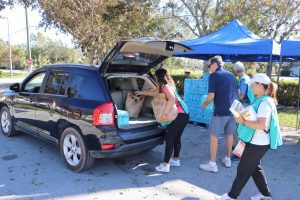 At the Centro Juan Diego Catholic Charities offices in Bonita Springs next to St. Leo the Great Parish, the scene was similar with a huge number of vehicles arriving early in the morning before the POD was operational and staffed.
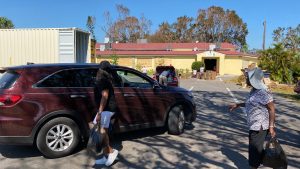 River flooding of low-lying areas and standing water has made travel difficult, especially when Interstate 75 was closed in North Port for more than a day and the U.S. 41 bridges in Punta Gorda for several days.