




Story in Spanish below – La historia en español aparece a continuación
Bob Reddy – Florida Catholic
Whether participating in sports, discerning a vocation to religious life, serving in missions overseas or running a large parish, Bishop Emilio Biosca Agüero, O.F.M. Cap., always kept a strong connection to his loving and growing immigrant family.
In his 61 years, Bishop Emilio has tried to live his life in the best way he can, always trying to keep the ties to his family strong even when living thousands of miles away.
Family history
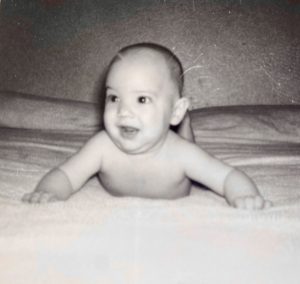
Bishop Emilio was born in December 1964 in Colorado Springs, Colorado, the third of seven children, and first in his family to be born in the United States. Maria (June 1962) and Ana Cristina (January 1964) were both born in Cuba.
He was baptized 10 days later, on Christmas Day at St. Patrick’s Church in Pueblo. His parents, Emilio Rodolfo Biosca and Maria del Carmen Agüero, were recent immigrants from Cuba who fled the Communist country in search of freedom and a better life for their family.
The bishop can trace his family history in Cuba back many generations, about 500 years on his mother’s side of the family, and at least 150 years of his father’s side. The stories his father and mother shared of their long family history and the difficult decision to flee the communist country and leave everything behind had a lasting impact.
Bishop Emilio’s sister, Beatrice Pennefather, said their father shared stories of the family’s life in Cuba to teach the children the importance of knowing their roots while at the same time learning the lesson of what could be lost and relying on their faith to help get through difficult times.
When the Communist revolution took place on Jan. 1, 1959, families were torn apart. Emilio Rodolfo Biosca and Maria del Carmen Agüero were married on July 29, 1961. This was months after the failed Bay of Pigs invasion. Several relatives were part of the invasion and were captured and imprisoned while others relatives were incorporated into the enthusiasm of the communist revolution.
By 1964, the churches had been closed, some priests had been deported, Catholic schools and hospitals had been confiscated and his parents saw how grave the situation was in Cuba, both politically and religiously, and realizing it wasn’t going to change, the Biosca’s, now with two daughters, and their extended families made the decision together to leave.
T
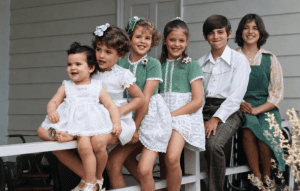
he stories from his parents about life in Cuba, before and after the revolution, and then their fleeing to the United States, had a deep impact on the bishop.
“Their immigration experience. Their coming to the United States for religious freedom and for economic reasons at that time, certainly marked my life and my vocation,” Bishop Emilio said. “They had to leave everything behind. They exchanged freedom for all of their material goods and for the history that had been part of the family for many generations. I remember that my dad said that once they knew the extent of the communist power over the country, they didn’t think twice and made a firm decision.”
When Bishop Emilio went to Cuba as a missionary priest from 2007-2019, he tried to rekindled family ties that had been broken as a result of the communist revolution.
“All of these people are scattered, but he is the thread that had come through and united our family, extending it in a way that would not have happened if he wouldn’t have been down there,” Beatrice said. “His focus on learning the family history and redefining us. We are family. Family means something.”
Living in America
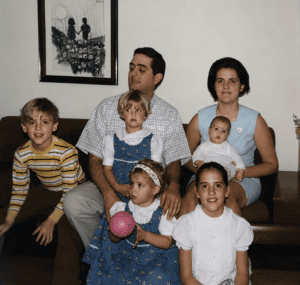
The Biosca’s arrived in Colorado in 1964, with two daughters Maria (1962) and Ana Christina (1964), who was g
ravely ill at the time, and with his mother pregnant with Bishop Emilio. After he was born, the family continued to seek help for Ana Cristina, but she passed away on December 8, 1966. The family then moved to Kansas City, Missouri, where his father, already a practicing dentist in Cuba, worked and studied, graduating from the University of Missouri-Kansas City (UMKC) School of Dentistry. The family relocated near relatives in Virginia, where his father opened a practice.
Bishop Emilio attended St. Anthony and St. Leo Catholic schools, and then Bishop O’Connell High School, each in northern Virginia.
While he was growing up Bishop Emilio explained that his parents lived their life “simply and even austerely. We never wanted for anything, but my parents were careful about how they spent. Catholic education was a priority, so we all went to Catholic schools and this decision, for me, was formative.” Four additional daughters were welcomed into the family: Elena (1968), Beatrice (1969), Lisette (1971) (now a cloistered Poor Clare Nun, Sister Maria Jose of Jesus), and Patricia (1975).
He remembers growing up living in small apartments and the family car was used but practical. Gradually the family’s economics improved. Eventually in 1974 the family bought a house for the large family. “My parents were old-school. They didn’t believe in spending what they didn’t have, and even today they can’t understand how some people accumulate insurmountable debts.” Eventually, they did take out a modest loan to purchase a house.
Strong faith and values
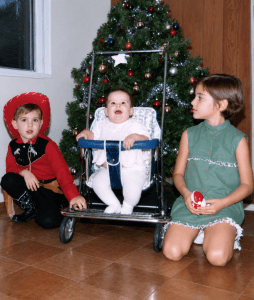
Bishop Emilio’s parents are deeply faithful but not in a fanatical or exaggerated manner. He describes their faith life as being balanced, serene and committed.
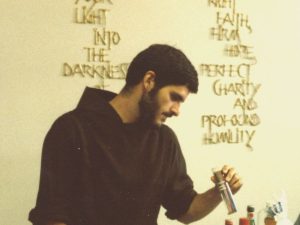
While still in Cuba, his father became a member of the ACU (Agrupación Católica Universitaria), which was founded in La Habana by Fr. Felipe Rey de Castro, SJ, in 1931 to form men in the faith. “They were formed in the model of “Esto Vir,” that is, “Be a Man,” from 1 Kings 2:2,” the bishop explained. “In Cuba, at that time, it meant formation in spirituality, professionalism and the apostolate. It was important to establish a male spirituality that included commitment to family life; fidelity in marriage; excellence in your work ethic; being honest in your work; to do a job well; and to offer service to the poor.”
Following the rise of the Communist regime and its anti-religion policies in the 1960s, the organization went into exile in the United States, continuing its mission in Miami and other places, like Washington DC. This group of men would meet every week for mass and confession. There were also presentations on the faith, with different men offering points of discussion on the latest papal encyclical, or key happenings in the church.
“When we moved to northern Virginia, Dad would go to meetings in D.C. There would be yearly retreats one weekend for men, and another for women, which would last for two or three days,” Bishop Emilio said. “Fr. Amando Llorente, SJ, led the group for many years. They were very well balanced and committed to the faith, with a very keen sense of commitment to the church, fidelity in marriage and dedication to the children.”
The bishop also shared that sometimes it seems that “people say that the faith or the family is their number one priority, but whenever a family is in conflict with some other value, it loses to almost everything else. Sometimes parents fall into idolatry of sports or grades. When you lose out on meals or outings together for something less important, it’s really not helpful for establishing the primacy of the faith or the family. My parents we very even keeled on those things. Grades were important, but it was not an idol. More of an idol to them was hard work and excellence in what you were supposed to do at any given time.”
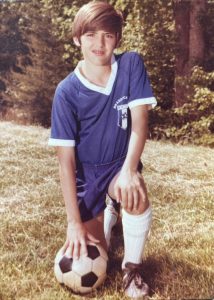
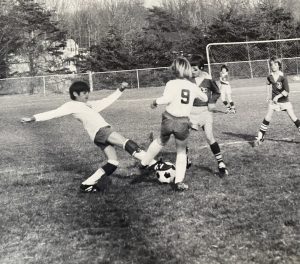
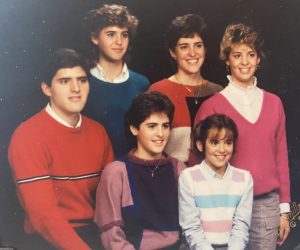 Bishop Emilio was very involved in sports growing up, particularly with soccer and was good enough to compete on travel teams, but even for important games, family would come first. “I would sometimes miss important matches because we would go to the mountains with our grandparents or other members of the family. My grandparents and family were more important. That was very impactful.”
The guidance of his parents in the importance of the mass meant that they instilled in their children that “all of the readings and homilies meant something. They also didn’t care who the priest was celebrating mass. I think that made an impact on me as well. They wanted to receive Holy Communion and to hear the Word of God. They could always find something worth meditating on from the priest’s homily.”
He also cannot remember a single Sunday when the family didn’t go to mass. Even while on vacation in Myrtle Beach, South Carolina, or camping in the Shenandoah mountains of Virginia, the first thing his parents did when arriving at their destination was to find the local Catholic church and figure out what time mass was. “We would go about our vacation and be sure to be there for Sunday mass.”
Patricia Albisu, Bishop Emilio’s youngest sister, said that the big family vacations were “an important waste of time, because that’s when the connections grow and you make time for each other.”
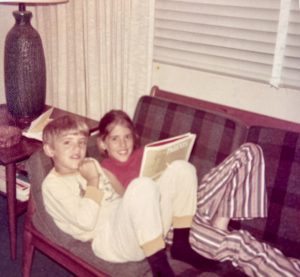
Being the only boy with many sisters, Bishop Emilio was a typical teen, hanging out with neighborhood friends and those from his soccer teams. He was always kind to everyone, but he was also protective of his sisters and mindful of people’s feelings, Beatrice recalled. She described when Bishop Emilio broke his toe during his senior year in high school and couldn’t play soccer for two months, so he joined the chess team and made instant friends while keeping the ones from sports. “He wasn’t into superficial status. He did what was right.”
If he saw anyone teasing his sisters, he would scold them, but the same rule applied to the girls if they spoke poorly about his friends, reminding them all that they “should always recognize the dignity of everybody and you are not better than anybody.”
In addition, he always shared what he had with his sisters. Beatrice said that when her brother received an electronic football game as a gift, he taught his sisters how to play. He would also play football with them on a nearby field, playing quarterback as the girls caught the thrown balls, always being positive whether the ball was caught or not.
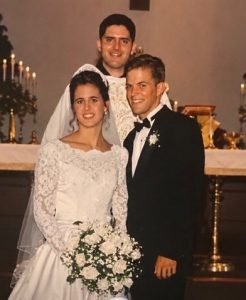
When he entered religious life with the Capuchin Franciscans no one in the family was surprised, Beatrice said. “It was just such a natural thing.”
As a child, on occasion, Bishop Emilio would imitate the celebration of the mass for the other children in the family.
Sharing the news with his family
When Bishop Emilio was informed that he had been appointed as a bishop in Florida he waited until only a few days before it would be known publicly to tell his parents and sisters. He arranged for everyone to know at the same time on a FaceTime call.
“He said, ‘I’ve been asked to be Bishop of Venice, Florida,’ and there was just silence. We were just stunned,” Beatrice explained.
The news came out of nowhere because he had just been elected Vice Provincial for the Capuchins in May 2025, so the family thought he would be staying at his assignment in Washington for a while longer or be elevated to a higher position in the Capuchins, even though he had spoken about going back to Cuba.
Elena Doyle, another of Bisho Emilio’s sisters, said she was also shocked by the news but went on to explain how the family members know he has what it takes to be a bishop. “Not really surprised, but full of joy for the people of Venice because I know the man he is full of pureness and humility,” Elena said.
Beatrice described her brother as someone who always lived his vocation beautifully, uniting and giving people hope
Bishop Emilio’s family never expected him to return from his mission in Cuba, so it was always a question when they would see him, or if he could be around for important family moments, such as anniversaries, birthdays and so on. Having been a missionary for so many years meant Bishop Emilio had missed many key family moments, including the births of many of his 24 nieces and nephews, as well as some of the 12 grandnieces and grandnephews, and two more on the way.
Being assigned as a pastor in a parish in DC in 2019, so close to family, was unexpected and was providential for the family, Elena explained, because at that time, Maria, the oldest of the siblings, had been diagnosed with a grave illness and he guided everyone through that difficult time. She passed away in 2022.
Elena said the time near family meant Bishop Emilio would make time on his days off to spend the night at his parent’s house and celebrating mass. During the past seven years, “he got to know his nieces and nephews, so we all really got used to that,” Elena said.
Patricia said her children were disappointed by the news he would be going to Florida, with her youngest daughter sad that he wouldn’t be able to visit and play games with her, but she explained, “he’s still your uncle. He just has new responsibilities.”
“Because of the gifts God gave us these past seven years, it makes it a little bit easier to give him to the people of Venice,” Beatrice said. “We had given him to the people of Washington, and he has done some amazing things over there. Not being able to see him as much is going to be hard, but that’s just us being selfish. Now we give him to the people of Venice.”
La familia, importante para nuestro nuevo obispo
El legado espiritual familiar marca su vocación sacerdotal
Ya fuera al participar en los deportes, discernir una vocación a la vida religiosa, servir en misiones en el extranjero, o dirigir una gran parroquia, el Obispo Emilio Biosca Agüero, O.F.M. Cap., siempre mantuvo una fuerte conexión con su cariñosa y creciente familia inmigrante.
Durante sus 61 años, Obispo Emilio —como prefiere que le llamen— ha tratado de vivir su vida de la mejor manera posible, procurando siempre mantener unos fuertes lazos familiares, incluso cuando vivía a miles de millas de distancia.
Historia familiar
 Obispo Emilio nació en diciembre de 1964 en Colorado Springs, Colorado, el tercero de siete hijos y el primero de su familia en nacer en los Estados Unidos. Sus hermanas María y Ana Cristina nacieron en Cuba en junio de 1962 y enero de 1964, respectivamente.
Obispo Emilio fue bautizado a los 10 días, el día de Navidad, en la iglesia St. Patrick, en Pueblo. Sus padres, Emilio Rodolfo Biosca y María del Carmen Agüero, eran inmigrantes recientes de Cuba que huyeron del país comunista en busca de libertad y una vida mejor para su familia.
El obispo puede rastrear la historia de su familia en Cuba por muchas generaciones: aproximadamente 500 años por parte de su madre y al menos 150 por parte de su padre. Los recuentos que sus padres compartieron sobre su larga historia familiar y la difícil decisión de huir del país comunista, dejando todo atrás, tuvieron un impacto duradero.
Beatrice Pennefather, hermana de Obispo Emilio, contó que su padre compartía historias de la vida familiar en Cuba para enseñarles a los hijos la importancia de conocer sus raíces, mientras aprendían también la lección de lo que se puede perder y de cómo apoyarse en la fe para superar tiempos difíciles.
Cuando estalló la revolución comunista el 1 de enero de 1959, las familias quedaron divididas. Emilio Rodolfo Biosca y María del Carmen Agüero se casaron el 29 de julio de 1961, meses después de la fallida invasión de Bahía de Cochinos. Varios familiares participaron en la invasión y fueron capturados y encarcelados, mientras que el entusiasmo de la revolución comunista absorbió a otros.
Para 1964, las iglesias habían sido cerradas, muchos sacerdotes deportados, las escuelas y hospitales católicos confiscados. Sus padres se dieron cuenta de cuán grave era la situación en Cuba, tanto a nivel político como religioso. Al ver que no cambiaría, los Biosca, ya con dos hijas, y sus familias extendidas decidieron marcharse.
Las historias de sus padres sobre la vida en Cuba, antes y después de la revolución, y luego su huida a los Estados Unidos, tuvieron un profundo impacto en el obispo.
“La experiencia de su inmigración, su llegada a los Estados Unidos por la libertad religiosa y por razones económicas en ese momento, ciertamente marcaron mi vida y mi vocación”, reflexionó Obispo Emilio. “Tuvieron que dejar todo atrás. Por la libertad, cambiaron todos sus bienes materiales y la historia que había sido parte de la familia durante muchas generaciones. Recuerdo que mi papá nos dijo que, una vez comprendieron el alcance del poder comunista sobre el país, no lo pensaron dos veces y tomaron una decisión firme”.
Cuando Obispo Emilio fue a Cuba como sacerdote misionero de 2007 a 2019, trató de reavivar los lazos familiares que se habían roto como resultado de la revolución comunista.
“Todas estas personas están dispersas, pero él es el hilo que vino a unir a nuestra familia, extendiéndola de una manera que no habría sucedido si él no hubiera estado allá”, aseguró Pennefather. “Su enfoque fue aprender la historia familiar y redefinirnos. Somos familia. La familia significa algo”.
Vida en los Estados Unidos
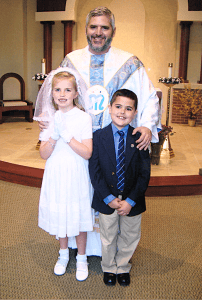 Los Biosca llegaron a Colorado en 1964 con sus dos hijas, María y Ana Cristina, quien se encontraba gravemente enferma en ese momento. Su madre embarazada esperaba el nacimiento de Obispo Emilio. Tras el nacimiento, la familia continuó buscando ayuda para Ana Cristina, pero la niña falleció el 8 de diciembre de 1966. La familia se mudó a Kansas City, Missouri, donde su padre —quien era dentista en Cuba— trabajó y estudió, graduándose de la Facultad de Odontología de la Universidad de Missouri-Kansas City. Se mudaron cerca de familiares en Virginia, donde su padre abrió un consultorio.
Obispo Emilio asistió a las escuelas católicas St. Anthony y St. Leo, y luego a la escuela secundaria Bishop O’Connell, todas en el norte de Virginia. Compartió que sus padres vivían “de manera simple e incluso austera. Nunca nos faltó nada, pero mis padres eran cuidadosos con sus gastos. La educación católica era una prioridad, así que todos fuimos a escuelas católicas, y esta decisión, para mí, fue formativa”. Cuatro nuevas hijas llegaron a la familia: Elena, nacida en 1968; Beatrice, nacida en 1969; Lisette, nacida en 1971, y quien ahora es la Hna. María José de Jesús, religiosa de las Clarisas Capuchinas; y Patricia, nacida en 1975.
Recuerda haber crecido en apartamentos pequeños, y que el automóvil familiar era de segunda mano, pero práctico. Con el paso del tiempo, la economía familiar mejoró. Eventualmente tomaron un préstamo modesto, y compraron una casa en 1974 para su numerosa familia.
“Mis padres eran tradicionales”, observó. “No creían en gastar lo que no tenían, y aún hoy no pueden entender cómo algunas personas acumulan deudas insuperables”.
Una fe y valores sólidos
Los padres de Obispo Emilio son profundamente fieles, pero no de una manera fanática o exagerada. Él describe su vida de fe como equilibrada, serena y comprometida.
Mientras aún vivía en Cuba, su padre se convirtió en miembro de la Agrupación Católica Universitaria (ACU), fundada en La Habana por el P. Felipe Rey de Castro, SJ, en 1931 para formar hombres en la fe.
“Se formaban en el modelo de Esto Vir, es decir, ‘Sé un hombre’, basado en 1 Reyes 2:2”, explicó el obispo. “En aquel tiempo en Cuba, eso significaba formación en la espiritualidad, el profesionalismo y el apostolado. Era importante establecer una espiritualidad masculina que incluyera el compromiso con la vida familiar, fidelidad en el matrimonio, excelencia en la ética laboral, ser honesto en el trabajo, hacer bien el trabajo, y ofrecer servicio a los pobres”.
Tras el ascenso del régimen comunista y sus políticas antirreligiosas en la década de 1960, la organización se exilió en los Estados Unidos, continuando su misión en Miami y otros lugares como Washington D.C. El grupo de hombres se reunía cada semana para confesarse y asistir a misa. También había presentaciones sobre la fe, en las que distintos miembros ofrecían puntos de discusión sobre la última encíclica papal o los acontecimientos importantes en la Iglesia.
“Cuando nos mudamos al norte de Virginia, papá iba a reuniones en D.C. Había retiros anuales de fin de semana para hombres y otros para mujeres, que duraban dos o tres días”, dijo Obispo Emilio. “El P. Amando Llorente, SJ, dirigió el grupo durante muchos años. Eran muy sensatos y comprometidos con la fe, con un fuerte sentido de compromiso con la Iglesia, fidelidad en el matrimonio, y dedicación a los hijos”.
El obispo observó que a veces “la gente dice que la fe o la familia es su prioridad, pero cuando la familia entra en conflicto con algún otro valor, pierde ante casi todo lo demás”.
Observó que hay ocasiones en que los padres caen en la idolatría de los deportes o las calificaciones.
“Sacrificar cenas o salidas juntos por algo menos importante, no ayuda a establecer la primacía de la fe o la familia”, enfatizó. “Mis padres eran muy ecuánimes en esas cosas. Las calificaciones eran importantes, pero no eran un ídolo. Más bien, el modelo para ellos era el trabajo arduo y la excelencia en lo que uno debía hacer en cualquier momento”.
Obispo Emilio estuvo muy involucrado en los deportes mientras crecía, particularmente en el fútbol, y era lo suficientemente bueno como para competir en equipos de viaje. Sin embargo, la familia tenía prioridad, incluso ante los partidos relevantes.
“A veces me perdía partidos importantes porque íbamos a las montañas con nuestros abuelos u otros miembros de la familia. Mis abuelos y mi familia eran primordiales”, aseguró. “Eso fue muy significativo”.
La dirección de sus padres sobre la importancia de la misa inculcó en sus hijos que “todas las lecturas y las homilías tenían significado. Tampoco les importaba quién celebraba la misa; creo que eso también tuvo influencia en mí. Querían recibir la Sagrada Comunión y escuchar la Palabra de Dios. Siempre encontraban algo digno de reflexión en la homilía del sacerdote”.
No puede recordar un solo domingo en el que la familia no asistiera a la misa. Incluso, al estar de vacaciones en Myrtle Beach, Carolina del Sur, o al acampar en las montañas Shenandoah de Virginia, lo primero que hacían sus padres al llegar era buscar la iglesia católica local para saber a qué hora era la misa.
“Íbamos de vacaciones, pero nos asegurábamos de asistir a la misa dominical”, afirmó.
Patricia Albisu, hermana menor de Obispo Emilio, dijo que las grandes vacaciones familiares eran “un ‘tiempo perdido’ en el mejor sentido, porque era cuando las conexiones crecían y hacías tiempo para los demás”.
Al ser el único varón entre muchas hermanas, Obispo Emilio era un adolescente típico que pasaba tiempo con amigos del vecindario y de sus equipos de fútbol. Siempre fue amable con todos, pero también protector de sus hermanas y atento a los sentimientos de los demás, recordó Pennefather.
Compartió que Obispo Emilio se fracturó un dedo del pie en su último año de secundaria y no pudo jugar fútbol durante dos meses. Entonces, se unió al equipo de ajedrez, donde rápidamente hizo amigos pero sin perder los que ya tenía del deporte.
“No le interesaba el estatus superficial”, dijo Pennefather. “Hacía lo que era correcto”.
Si veía que alguien importunaba a sus hermanas, le reprendía, pero la misma regla aplicaba a sus hermanas si hablaban mal de sus amistades, y les recordaba que “deben reconocer la dignidad de todos y que no eran mejores que nadie”.
Además, siempre compartía lo que tenía con sus hermanas. Pennefather recordó que cuando su hermano recibió como regalo un juego electrónico de fútbol, él les enseñó cómo jugar. También jugaba con ellas en un campo cercano, y era el quarterback, o mariscal de campo, mientras ellas atrapaban los pases. Siempre fue muy positivo y les motivaba, atraparan o no el balón.
Cuando ingresó a la vida religiosa con los franciscanos capuchinos, nadie en la familia se sorprendió.
“Fue algo muy natural”, aseguró Pennefather, pues de niño, Obispo Emilio imitaba la celebración de la misa para los otros niños de la familia.
El anuncio a su familia
Cuando fue informado sobre su nombramiento como obispo en Florida, Obispo Emilio esperó hasta pocos días antes de que se hiciera público para decírselo a sus padres y hermanas. Organizó una llamada por FaceTime para que todos se enteraran al mismo tiempo.
“Nos dijo: ‘Me han pedido ser Obispo de Venice, Florida’, y hubo silencio. Estábamos atónitos”, recordó Pennefather.
La noticia llegó de manera inesperada porque él recientemente había sido elegido viceprovincial de los capuchinos en mayo de 2025, y la familia pensaba que permanecería en su destino en Washington por más tiempo, o sería elevado a un puesto más alto dentro de la orden religiosa, aunque él había hablado de regresar a Cuba.
Elena Doyle, otra de las hermanas de Obispo Emilio, compartió que la noticia le tomó por sorpresa en un primer momento, aunque añadió que la familia siempre ha sabido que él tiene lo que se necesita para ser obispo.
“No me sorprende en el fondo”, aseguró Doyle, “pero sí me llena de alegría por el pueblo de Venice, porque sé el hombre que es: lleno de pureza y humildad”.
Pennefather describió a su hermano como alguien que siempre vivió su vocación de una manera hermosa, al unir y dar esperanza a las personas.
La familia de Obispo Emilio no esperaba que regresara de su misión en Cuba, por lo que nunca se sabía cuándo lo verían o si podría estar presente en momentos familiares importantes, como aniversarios, cumpleaños y otros. Al haber sido misionero durante tantos años, Obispo Emilio no pudo participar en muchos momentos familiares clave, incluidos los nacimientos de muchos de sus 24 sobrinos y sobrinas, así como algunos de los 12 sobrinos nietos, y dos más en camino.
Ser asignado como párroco en Washington D.C. en 2019, tan cerca de la familia, fue inesperado y providencial, explicó Doyle, porque en aquel momento María, la mayor de los hermanos, había sido diagnosticada con una enfermedad grave y él guió a todos durante ese tiempo difícil. María falleció en 2022.
Doyle contó que al estar cerca de la familia, Obispo Emilio tomaba tiempo en sus días libres para pasar la noche en la casa de sus padres y celebrar la misa. Durante los últimos siete años, “llegó a conocer a sus sobrinos y sobrinas, así que todos nos acostumbramos a eso”, compartió.
Albisu dijo que la noticia de que su hermano se establecería en Florida impactó profundamente a sus hijos. Su hija menor estaba triste porque ya no podría visitarlo y compartir ratos de juego con él, pero Albisu le explicó que “sigue siendo tu tío, solo que ahora tiene nuevas responsabilidades”.
“Por los dones que Dios nos concedió estos últimos siete años, se hace un poco más fácil confiarlo al pueblo de Venice”, sostuvo Pennefather. “Ya lo habíamos confiado al pueblo de Washington, y allí hizo cosas maravillosas. No poder verlo tanto será difícil, pero eso es solo egoísmo nuestro. Ahora lo entregamos al pueblo de Venice”.