




Band camp takes place
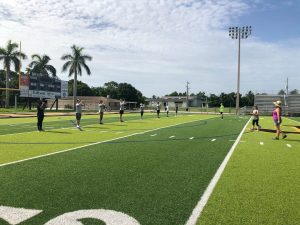
Maintaining social distance while keeping in rhythm is the new challenge for participants in the Bishop Verot Catholic High School Band Camp in the last week of July 2020. Participants are learned new routines to be incorporated into performances during the coming year.
Spiritual Exercises for Spanish Movement lay leaders
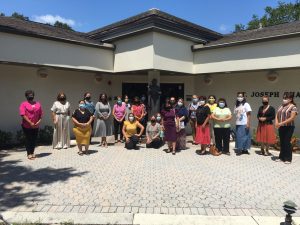
During the month of July, some lay members of the Spanish-language Diocesan Directors of the Apostolic Movements had the opportunity to participate in Ignatian Spiritual Exercises at Our Lady of Perpetual Help Retreat Center in Venice. These exercises have been proposed by the Church as a true school of spiritual life. The groups were divided between men and women to ensure social distancing was maintained.
Year of Saint Joseph
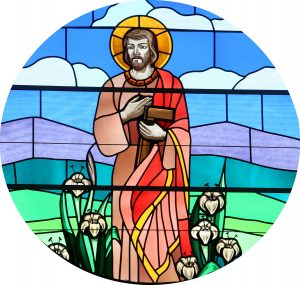
On the Solemnity of St. Joseph, March 19, Bishop Frank J. Dewane, in the context of the Coronavirus, consecrated the Diocese of Venice to the care and protection of St. Joseph. The Bishop announced a “Year of St. Joseph” beginning March 19, 2020 through March 19, 2021. St. Joseph, often referred to as the Protector, can be our protector during this time of the pandemic. To pray a Novena to St. Joseph please visit the Year of St. Joseph webpage at https://dioceseofvenice.org/a-year-of-st-joseph/.
Dispensation
While the celebration of public Mass resumed May 18, 2020, Bishop Frank J. Dewane announced that the dispensation from the obligation to attend Sunday Mass remains in effect through Sept. 1, 2020 for those who are at greater risk or anxious about returning at this time. The Faithful ought not to worry about remaining home if they are concerned for their wellbeing or that of other parishioners. Of course, those who are sick or have symptoms associated with COVID-19 are to stay home. Please check the Diocese of Venice website for any updates.
Livestreaming
The Diocese of Venice will continue livestreaming the Mass through the Diocese website (www.dioceseofvenice.org) and Facebook pages from the Catholic Center in Venice 9:15 a.m. daily as the dispensation to attend Mass remains.
Sunday Televised Mass
The Televised Mass for the Homebound is available throughout the Diocese each Sunday. In northern parts of the Diocese (Manatee, Highlands, Hardee, Sarasota, DeSoto and Charlotte counties) the Mass airs on television at 9:30 a.m. on the CW Network. In the southern portions of the Diocese (Collier, Lee, Glades, Hendry, Charlotte counties) the Mass airs at 10:30 a.m., on WFTX-TV (FOX-4). This same Mass can be found on the Diocese of Venice website at any time during the week, www.dioceseofvenice.org/tvmass. Please check local listings for channel information.
Parish donations
During this challenging time in the life and mission of the Diocese of Venice, our Parishes face increased risk of financial shortfalls due to the COVID-19 Pandemic and its effects on everyday life. Parishes depend on weekly financial gifts to continue their ministries, especially in this critical time of crisis. The Diocese of Venice is providing an online platform and encourages the Faithful to support their Parish. Please visit https://dioceseofvenice.org/ways-to-give/parish-donations-online/ to donate to your Parish. The Faithful may also contribute through usual channels (e.g., envelopes, and through the Parish online giving option). Together we will navigate through this crisis, provide assistance to those in need, and secure the road ahead for the Parishes within the Diocese of Venice.
Online Resources
A special coronavirus webpage is located on the Diocese of Venice website at www.dioceseofvenice.org. Resources include links to the Mass, the prayer for an Act of the Spiritual Communion, videos of the Stations of the Cross, Divine Mercy Chaplet and Pray the Rosary. The U.S. Conference of Catholic Bishops website, www.usccb.org, also posts the daily Mass readings.
Act of Spiritual Communion
It has long been a Catholic understanding that when circumstances prevent one from receiving Holy Communion, it is possible to make an Act of Spiritual Communion which is a source of grace. Spiritual Communion means uniting one’s self in prayer with Christ’s sacrifice and worshiping Him in His Body and Blood.
The most common reason for making an Act of Spiritual Communion is when a person cannot attend Mass, as is the case during the ongoing coronavirus pandemic. Acts of Spiritual Communion increase our desire to receive sacramental Communion and help us avoid the sins that would make us unable to receive Holy Communion worthily.
For all who will not be able to receive the Holy Eucharist in person, consider this special prayer, an Act of Spiritual Communion:
My Jesus,
I believe that You
are present in the Most Holy Sacrament.
I love You above all things,
and I desire to receive You into my soul.
Since I cannot at this moment receive You sacramentally,
come at least spiritually into my heart.
I embrace You as if You were already there
and unite myself wholly to You.
Never permit me to be separated from You.
Amen.
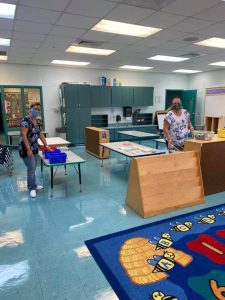
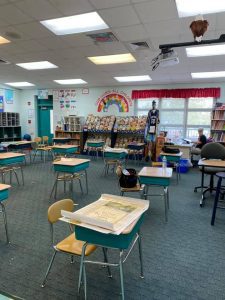 Father Belmonte added that during “the past four months, we have learned in a deeper way, the value and importance of our Catholic schools. Our Catholic Faith teaches us that it is Christ who is the reason for our schools. As we open this fall, recall that we teach Christ Himself. It is Christ who teaches us, rescues us, saves us, redeems us, heals us, unites us, forgives us, and loves us. Nothing can separate us from the love of God in Christ Jesus. In preparing to open our schools, let us remain focused on Christ who is the reason for our schools, the reason we teach, and the reason why we will gather, prudently and safely in the Fall.”
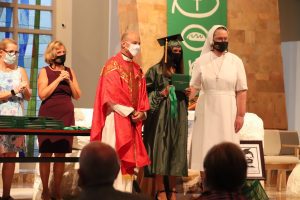 The celebration put a capstone on the high school lives of 80 graduates who are destined for futures unknown but grounded in a Christ-centered education. While the ceremonies were delayed two months because of the ongoing COVID-19 Pandemic, Sister Patricia Roche, Salesian Sister of St. John Bosco and Principal, declared at the conclusion of the evening events; “You have overcome much, but know you are loved by your Celtic family and always loved by God. Once a Celtic, always a Celtic.”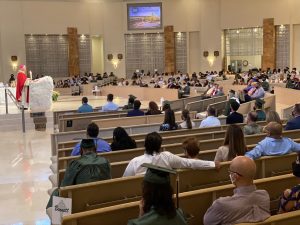
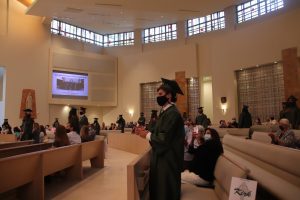 Guests at the Mass and commencement were limited to immediate family to ensure social distancing could be maintained. The graduates, wearing specially provided “Class of 2020” masks, were spread across the church and seated with their families versus clustered together.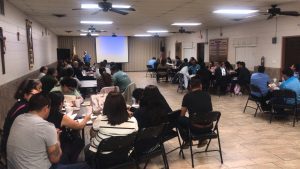
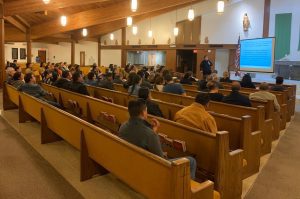
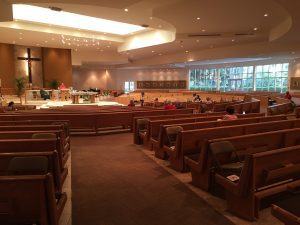
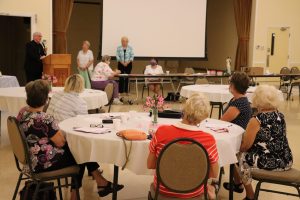 Bishop Frank J. Dewane was honored at a special gathering of the Venice Diocesan Council of Catholic Women on July 25, 2020 at Epiphany Cathedral Parish Hall in Venice. The meeting coincided with the 14th anniversary of Bishop Dewane’s Episcopal Ordination as Bishop of the Diocese of Venice in Florida in 2006. The VDCCW leadership presented the Bishop with a check for $9,000 to be used to support the Diocesan seminarians.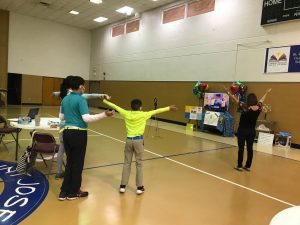
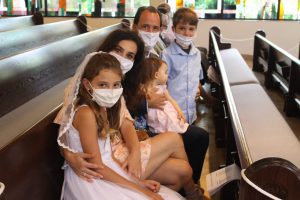 The Sewing Group of St. John the Evangelist Parish in Naples donated 200 white masks for use at Mass by First Communicants and their families on July 11, 2020. The Faith Formation team facilitated the distribution of the masks for the boys and girls as well as their families. Two Mass were scheduled for all of the children as all social distancing rules were followed.
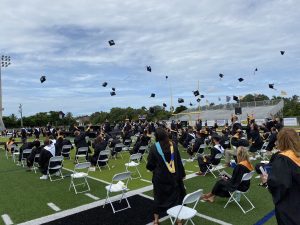
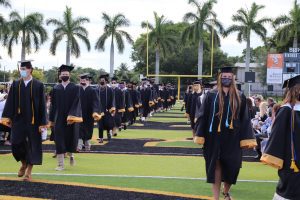
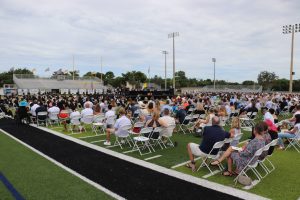
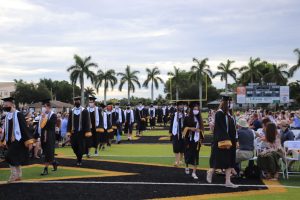 The Verot Class of 2020 overcame the impacts of Hurricane Irma in 2017 which closed their school down for weeks and it took more than a year to complete repairs. Then, just as they were on the brink of the final quarter of their senior year in high school, the world changed. The COVID-19 Pandemic cancelled in-person classes and the resulting quarantine and online classes put a new and trying meaning to distance learning for the close-knit group of 157 graduates.
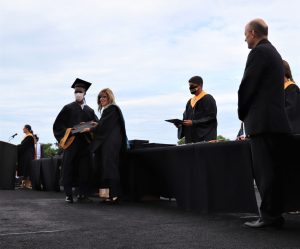 These students have achieved much, having been offered more than $22 million in scholarships and nearly all with plans for higher education. Because of the delay in graduation, a few students were unable to attend, therefore the graduation was streamed live through the Verot website.
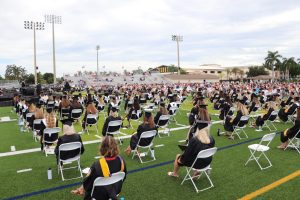 Important commencement traditions remained, such as parents who are Verot alumni were invited to the stage to present their child with their diploma. Because of the pandemic, there were no handshakes when diplomas or awards were presented.
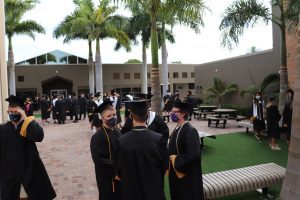 One moment which brought a spontaneous applause was when the father of Mateo Devito accepted the diploma on his behalf, the same day he was being inducted into the U.S. Navy at the U.S. Naval Academy. The closing benediction was given by Father John Belmonte, a Jesuit priest who is the new Diocese of Venice Superintendent of Education.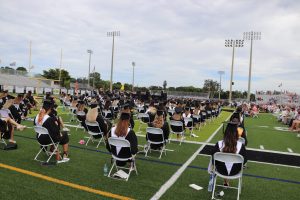
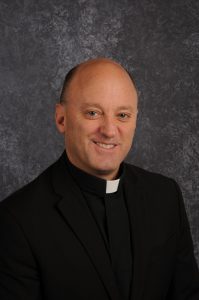 The complexities of this task are monumental, and all options are being considered, explained Father John Belmonte, SJ, Diocese Superintendent of Catholic Education. Parents will be notified as soon as all plans are formalized.
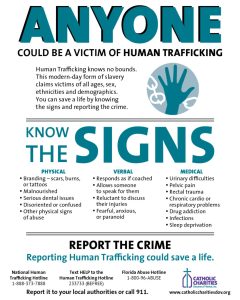
 Add the COVID-19 Pandemic into the mix and many who were far along in the process into leading a “normal” life free from fear, are now at high risk of being trafficked again.