




The 12th Annual Veterans Day Catholic Mass made a successful return Sarasota National Cemetery as Bishop Frank J. Dewane prayed for those currently serving in the U.S. Armed Forces, those who have died, and their families.
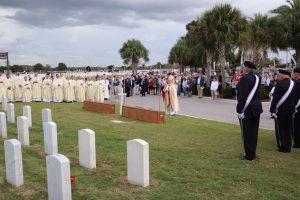 More than 500 people attended the Mass which was celebrated in 2020 at Epiphany Cathedral in Venice out of caution because of the global pandemic and a threat from a hurricane.
Bishop Dewane thanked the veterans for their service in defense of freedom, enjoyed to this day thanks to those who served and sacrificed throughout this nation’s history and those who will continue to answer the call in the future.
“We come here to say, ‘Thank you!’ to all veterans in a very particular way,” the Bishop said. “We remember them in our prayers and in the intentions of this Mass. We stand up and we speak out for liberties and the freedom that we enjoy; but we must remember at all times those who have made it all possible. You were called to serve that the rest of us may have a more secure a safer life.”
Reflecting on the sacrifice of veterans, some of whom are elderly, some young and still some actively serving in posts around the world, Bishop Dewane acknowledged that the lasting impact of their service – be it physical or mental injury – is something that cannot be ignored and must be supported. He also recognized the sacrifice of military family members who are left behind and offered prayers for their comfort.
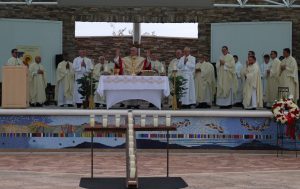 Citing from a statement by St. John Paul II, the Bishop said the brave men and women who have served our country upholding the dignity of human life, of a freedom, of liberty – transforms them somehow into soldiers for Christ.
“Our veterans wear their faith and hearts on their sleeves,” Bishop Dewane continued. “Let us in acknowledging the valiant fight they have given our country… Pray each and every day that they always know that, with God, all of us will be victorious and we will have eternal life.”
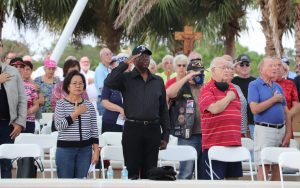
Prior to the opening of the Mass, all veterans – active and retired – were asked to stand and be recognized. This was followed by the singing of the National Anthem.
 The Sarasota National Cemetery celebration concluded with a procession, escorted by the Knights of Columbus Color Corps, to the nearby graves as those in attendance sang “God Bless America.” Priests, Deacons, and the Knights of Columbus Color Corps and all present, gathered in silent prayer before “Taps” was played on a bugle. Bishop Dewane also blessed the area with Holy Water.
U.S. Army Lt. Col. (Ret.) Scott Predmore, a 20-year veteran, expressed his gratitude for the Mass. “This means a great deal to me and really to all veterans. We served our country and would gladly do it again, but it’s a service that is not always appreciated,” Predmore said. “Having faith while serving in combat was something which helped me to get through some difficult times.”
There are about 25,000 veterans and eligible family members currently interred in the National Cemetery and more than 19 million military veterans in the United States.
The Diocese of Venice coordinates the Catholic Mass at the National Cemetery with the support of the Knights of Columbus. One of the graves is that of Father Robert G. Tierney, a former assistant at St. Joseph Parish in Bradenton, who served in the U.S. Navy. Father Tierney died in 2006 and was one of the first people buried in the National Cemetery.
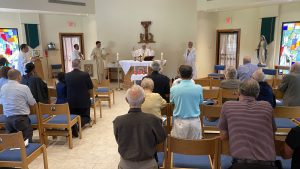 The Mass is held in November to coincide with the Month of All Souls. In addition to a number of Deacons and their spouses, also present were members of the Permanent Diaconate Formation Class of 2025, who, with their spouses, were on a weekend retreat in Sarasota.
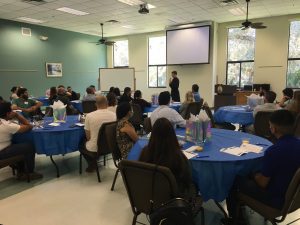 A volunteer team of married couples, clergy, and Natural Family Planning instructors shared their experiences and information Nov. 13, 2021, Our Lady of Perpetual Help Retreat Center in Venice. The intention of the seminar was to enable the 18 couples to become more aware of the privileges and responsibilities of a Catholic marriage.
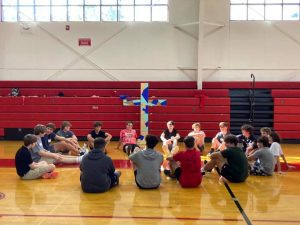
 For some 8 hours on Nov. 6, 2021 teens heard from inspirational speakers, rocked to spiritual music, and participated in Eucharistic Adoration and the Mass. At the same time, they bonded with each other and learned how they are an important part of the Universal Church.
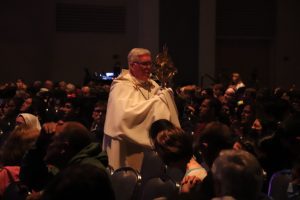 The theme for 2021 Diocese of Venice Youth Rally was “Sent” which comes directly from the Bible – “As you sent me in the world, so I sent them in the world” (John 17:18).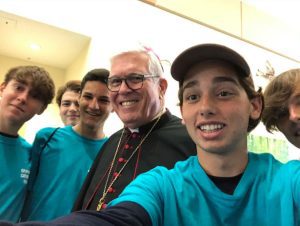
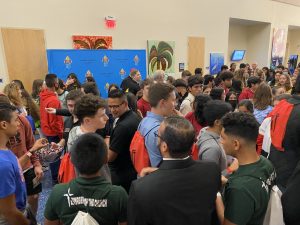
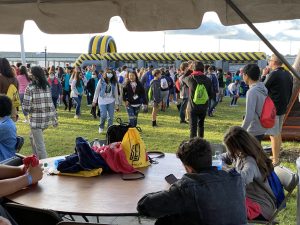
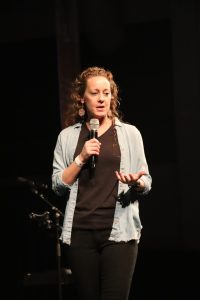
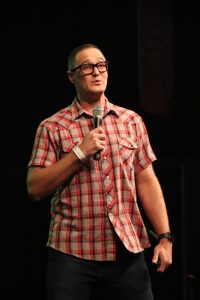
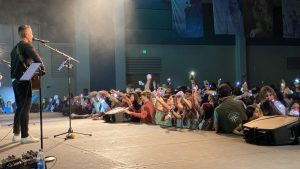 Throughout the day, the 2021 Youth Rally included an exciting line-up of speakers including David Calavitta and Kelly Colangelo. They each shared their unique Faith journey while also offering poignant advice to the teens as to how they can keep their focus on the Lord. Both stressed that the mid-teen years are a critical time as it is when the tumultuous world is trying to lure them down a darker path. At one point the young men were moved to a separate part of the facility thus allowing talks geared more personally toward the young women and men. The split sessions also included vocations talks.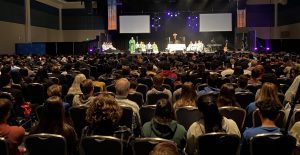
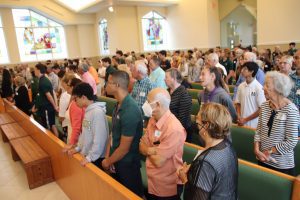 That celebration on Nov. 5, 2021, opened with a Mass celebrated by Bishop Frank J. Dewane as students sat with their grandparents in Our Lady of the Angels School Chapel. Afterwards, everyone went to the Student Life Center for a luncheon.
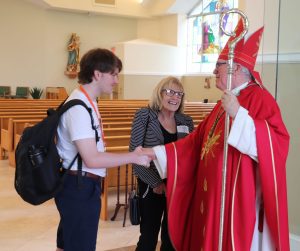 “You might say they are old, how can they know,” the Bishop continued. “That is why they know. They have faced the same difficulties. Get the experience; get the wisdom they offer. We can all learn something from each other by looking for the goodness within yourselves and within your grandparents. Bring generations together.”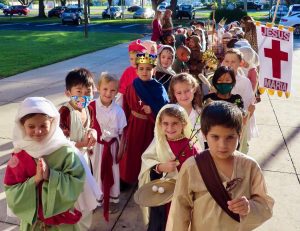
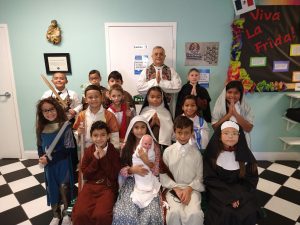
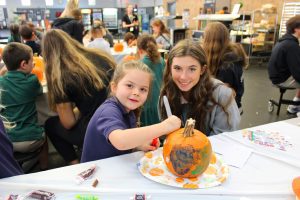
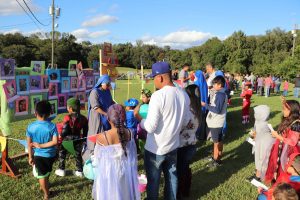 Meanwhile, St. Michael Parish in Wauchula decided to host a carnival/trick-or-treat event in the field behind the Parish. Children dressed as priests, angels and a variety of superheroes and other characters each had to complete a carnival game to receive candy. One game had children try to identify images of saints with only a small hint to help. All the candy was donated by the faithful at St. Raphael Parish in Englewood.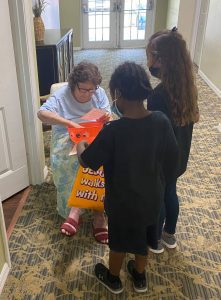
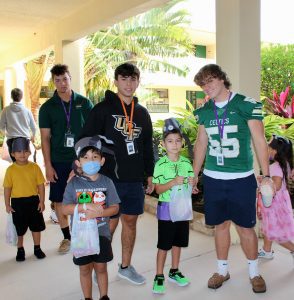
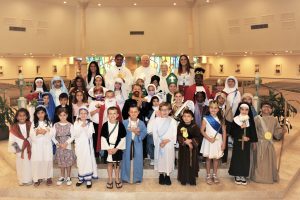 Pope Francis said true happiness does not come from being young, rich, or successful, as the world thinks, but from the counter-cultural idea to follow Jesus Christ. The Holy Father made his remarks during a special Angelus address for the Solemnity of All Saints, celebrated by the Catholic Church on Nov. 1, 2021. This year the obligation to attend Mass was abrogated in the United States because the Solemnity fell on a Monday.
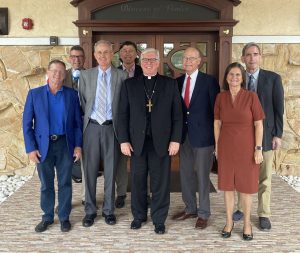 Leadership of the Southwest Florida Guild of the Catholic Medical Association met with Bishop Frank J. Dewane on Oct. 28, 2021 at the Catholic Center in Venice. The leadership provided Bishop Dewane with their annual report on their latest activities.
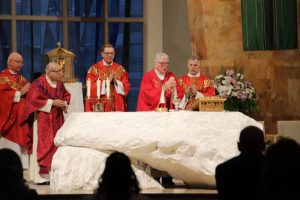 Bishop Dewane made these remarks during two Red Masses in late October for legal professionals. The name for the Masses comes from the red vestments worn by the celebrants, and for the calling of grace and guidance from the Holy Spirit to come upon all who seek and serve justice.
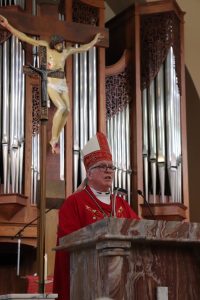 “The Church is keenly aware of your promotion of the common good,” the Bishop stressed. “Your generous service is often a concrete manifestation to build a society which is truly tolerant and inclusive – to safeguard the right of individuals and communities and to reject any form of unjust discrimination.”
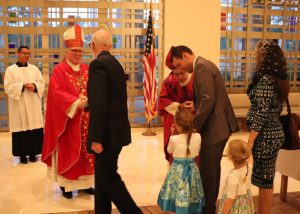 “The law deals with codified rights rather than an innate human dignity which resides in every human person,” Bishop Dewane concluded. “Here lies the tension which we often bring ourselves before the Lord.”
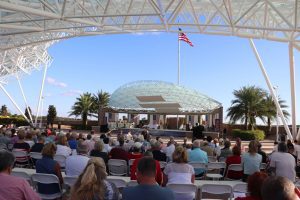 The Mass, preceded by an opening ceremony at 2:45 p.m., will allow the faithful an opportunity to honor veterans and pray for them, many of whom are laid to rest at the Sarasota National Cemetery. All are welcome to attend the Mass. Active military personnel are asked to wear their uniforms for the occasion.