




Appointments
After consultation with the Priest Personnel Board, Bishop Frank J. Dewane announces the following appointments:
Father Thomas Gregory Doughtery, as Parochial Vicar of St. John XXIII Parish, Fort Myers, effective June 10, 2024.
Father Mark Heuberger, retired as Pastor of Ss. Peter and Paul the Apostles Parish, Bradenton, effective June 30, 2024, and thus, is relieved of his duties as Pastor of Ss. Peter and Paul the Apostles Parish.
Father Gordon Zanetti, as Pastor of Ss. Peter and Paul the Apostles Parish, Bradenton, effective July 1, 2024, and thus, is relieved of his duties as Pastor of St. Thomas More Parish, Sarasota.
Father Nicholas Thompson, as Administrator of St. Thomas More Parish, Sarasota, effective July 1, 2024, and thus, is relieved of his duties as Parochial Vicar of St. John the Evangelist Parish, Naples.
Father William Adams, retired as Pastor of Ascension Parish, Fort Myers Beach, effective July 1, 2024, and thus, is relieved of his duties as Pastor of Ascension Parish.
Verot cheer team excels at Dance Camp
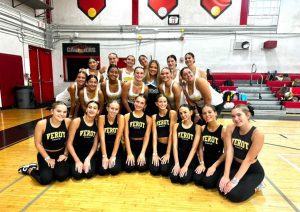
The Bishop Verot Catholic High School cheer team took part in the Universal Dance Association Dance Camp in Coral Gables from June 10-12, 2024. The varsity team was honored to be recognized with the Camp Leadership award, which is voted on by all the other teams at camp. Here are some other notable achievements: Home Routine: Junior Varsity 1st place, Varsity, 2nd Place; Varsity Performance Routine: Superior Rating, Choreography Award; Junior Varsity Performance Routine: Superior Rating; and Drill Downs: 3rd place, Hailey Fischer. The following competitors were recognized as All American Dancers: Junior Varsity: Mckenna Biehl and Amanda Dente; Varsity: Caylee Boeder, Celia DeMartino, Nora Drake, Camilla Motley, Hailey Fischer, Bailey Joslin, Kate Wilson and Isa Scala. Congratulations everyone!
Diocesan Totus Tuus program continues
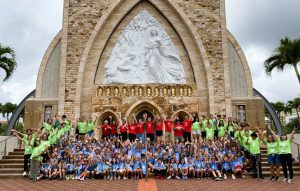 The Diocese of Venice Totus Tuus summer program continues, inspiring young people to long for holiness, develop a deep desire for conversion and personally renew their faith with a stronger prayer life. The week-long program is divided into two sessions, with the day camp for students entering grades 1 – 6, and the evening camp for middle school and high school students entering grades 7 – 12. Led by two missionary teams, the program has the Parish staff and volunteers augmenting the team, together they make the week one to remember. In the first three weeks, the program has taken place at five Parishes, with the most recent at St. Finbarr Parish in Naples and St. Paul Parish in Arcadia. Seven more Parishes will host the program through the end of July including the following: Epiphany Cathedral, Venice, and St. Katharine Drexel, Cape Coral (June 23-28); Our Lady Queen of Heaven, LaBelle (July 7-12); Our Lady of Light, Fort Myers, and St. Cecilia, Fort Myers (July 14-19); Our Lady of the Angels, Lakewood Ranch, and St. Peter the Apostle, Naples (July 21-26). To register, please contact the hosting Parish directly. Parish contact information can be found at https://dioceseofvenice.org/find-a-parish/.
Natural Family Planning introductory sessions available online
St Gianna’s Center will be offering introductory, virtual sessions (via Zoom) in The Creighton Model FertilityCare™ System (CrMS). The Creighton Model is a natural family planning method, based on common biological markers. These markers help women and couples understand the woman’s fertility and can help a couple naturally avoid or achieve pregnancy. Upcoming Sessions include June 27, 2024, as well as July 18, and August 29. The two-hour sessions each begin at 6:30 p.m. If you are interested in attending a virtual session, use the QR code on the flier to register, or call St. Gianna’s Center at 813-421-4625. For more information, visit https://www.stgiannacenter.com/events/, or contact Jim Gontis, gontis@dioceseofvenice.org.
Fourth of July Parade in Ave Maria
The 8th Annual “God Bless America” Independence Day Bike and Golf Cart Parade presented by Ave Maria Parish, 5088 Annunciation Circle, Ave Maria, will take place at 10:00 a.m., Thursday, July 4. The celebration will begin in the Piazza in front of the church and will include patriotic songs, a reflection from a veteran, prayers and then the parade that will include bikes, trikes, golf carts, strollers and more. The event is sponsored by the Knights of Columbus Ave Maria Assembly 3862. For further information call 239- 348-4725.
Donations of baby supplies needed
Community Pregnancy Centers Inc. is seeking donations of diapers and clothing to support the children of the women that are served each day. Items sought include new or gently used clothes (size 12 months to 3T); baby wipes; diapers (size 4-6); baby shampoo/lotion; new clothes for babies (0-3 months); pacifiers; pull ups/training diapers. Community Pregnancy Clinics has offices in Naples, Fort Myers and Sarasota. Please call 239-326-0453 or visit https://communitypregnancyclinic.com/ for locations.
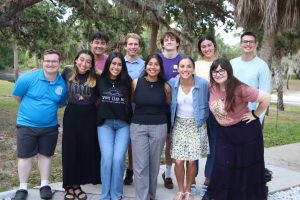
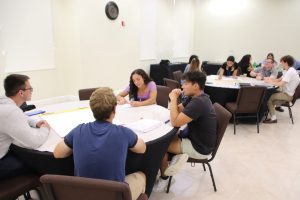
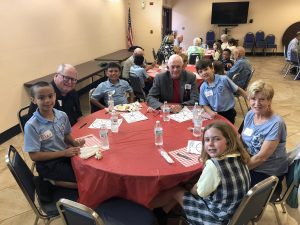
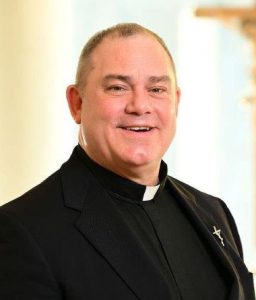
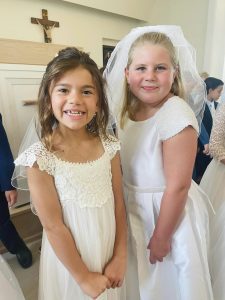
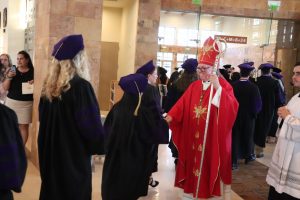 The graduates of the Ave Maria School of Law in Naples were told by Bishop Frank J. Dewane to go forward and allow the Holy Spirit to inspire them in their life, during a Baccalaureate Mass at St. Agnes Parish in Naples on May 10, 2024. Bishop Dewane also told them to follow the path of the Blessed Virgin Mary, the patroness of the school, who accepted in faith what the Lord asked. “Faith is a virtue – a welcoming and cherishing bond with Jesus Christ,” the Bishop said. “That is what makes us men and women of faith. Let it grow in your heart as you launch into a new life after having been given this tremendous opportunity and experience here at Ave Maria School of Law.” The commencement was April 12, Ascension Sunday and Mother’s Day, at Artis-Naples.
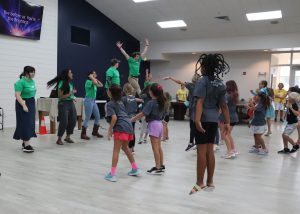
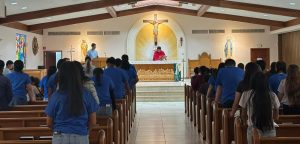
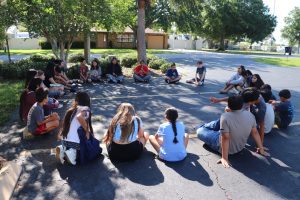
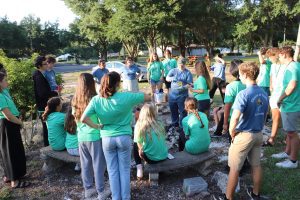
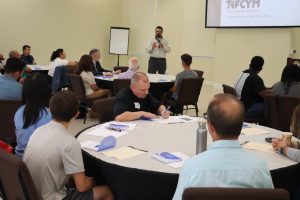 Of the more than 17,000 Parishes nationally, only 43 Parishes were selected by the NFCYM to take part in the pilot program nationally. The Diocese of Venice is blessed to have six participating, including: Epiphany Cathedral in Venice; St. Paul in Arcadia; St. Peter the Apostle in Naples; St. Joseph in Bradenton; Our Lady Queen of Heaven in LaBelle; and St. Catherine in Sebring. The program with the Diocese is being facilitated through the Youth and Young Adult Outreach Office, under the auspices of the Office of Evangelization.
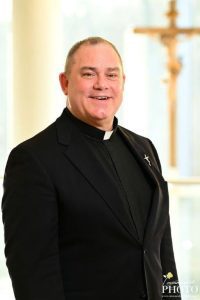
 “Sometimes the way we do youth ministry is not necessarily what is best for young people,” Montenegro said. “For 23 years I have seen plenty of young people coming through the Confirmation program and right after they are confirmed they act as if they graduated from the Catholic Church, and they don’t come back anymore. Or, after they go to university, and someone challenges them on their faith, that’s it, they don’t know how to believe anymore. The reason why I am here is because I also want to see how we can help young people get engaged to the Catholic Church.”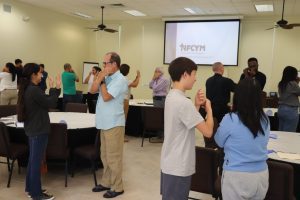
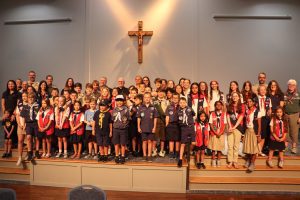 During a reception following Mass, Bishop Frank J. Dewane presented dozens of Scouting Religious Awards, with some Scouts receiving multiple honors.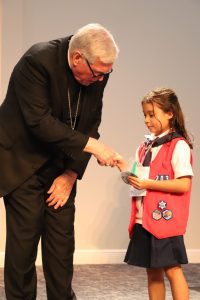

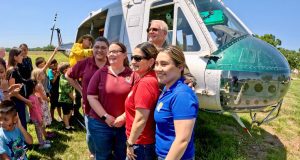 The Remake Learning Days Family Fun Day for residents of Casa San Juan Bosco, a farmworker housing community in Arcadia run by Catholic Charities, Diocese of Venice, Inc., took place April 20, 2024. There were games, food and information booths. There was also the surprise arrival of a Florida Department of Forestry helicopter landing in the soccer field. The two pilots answered many questions and allowed the children to climb up and into the helicopter.