Retired priest dies
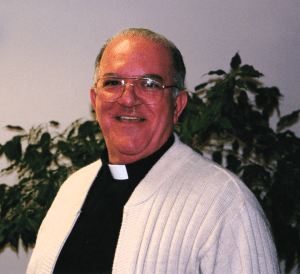 The Diocese of Venice is saddened to announce the death of Father Normado Feliz, who passed away Aug. 24, 2026, at the age of 79. Father Feliz was ordained on January 11, 1975, in Santo Domingo. Father served in the Dominican Republic as a Navy Chaplain, Pastor, and Seminary Professor of Liturgy, English and Spanish. Father Normando has served in the Diocese of Venice since January 1987 and was incardinated into the Diocese on April 10, 1990. His official appointments included Parochial Vicar at St. Paul Parish, Arcadia, and St. Andrew Parish, Cape Coral; and Pastor of Our Lady Queen of Heaven Parish, LaBelle, and Sacred Heart Parish, Bradenton. From 2000 to 2002 Father Feliz took a sabbatical for Scripture and Theology Studies and Graduate Studies in Canon Law. Between 2002 to 2004, Father served as Diocesan Director of the Department of Ministries. From August 2004 until his retirement in November 2008, Father Feliz served as Pastor of St. Peter the Apostle Parish in Naples. A Mass of Christian Burial was celebrated Aug. 28, 2026, at St. Andrew Parish, Coral Springs. Please pray for the repose of the soul of Father Feliz and the consolation of his family. May his soul and the souls of all the faithful departed through the mercy of God rest in eternal peace.
Prayer service for remembrance of aborted children Sept. 12
Incarnation Parish, 2901 Bee Ridge Road, Sarasota, will hold a prayerful commemoration for the 66 million children who have been aborted in the US since 1973, marking the 13th annual National Day of Remembrance for Aborted Children. Deacon Kevin McKenney will lead the prayer service immediately following the regular 8:30 a.m. Mass on Sept. 12, 2026. The commemoration is also intended to remind society of the humanity of the unborn child.
Space available for pilgrimage to St. Augustine
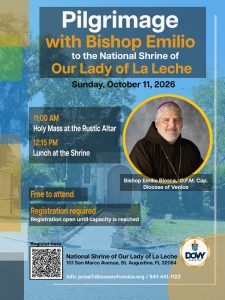 Registration is still open for the 11 a.m., Sunday Mass, Oct. 11, 2026, celebrated by Bishop Emilio E. Biosca, O.F.M. Cap., at the Rustic Altar at the Shrine National Shrine of Our Lady of La Leche, St. Augustine. The Mass will be followed by lunch. Participation is free, but registration is required and will remain open until capacity is reached. Register today at https://dioceseofvenice.regfox.com/st-augustine-pilgrimage. Come celebrate this beautiful day of faith and pilgrimage with Bishop Emilio and Catholics from throughout the Diocese of Venice. (Please note, all spaces for the Young Adult Campout with Bishop Emilio have now been filled.) We are grateful for the wonderful response from young adults across the Diocese of Venice!
School science and engineering building gets new name
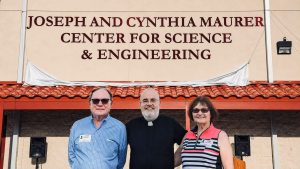
Middle school students at St. Charles Borromeo Catholic School, Port Charlotte, had the privilege of welcoming Joseph and Cynthia Maurer to campus Aug. 25, 2026, for the unveiling of the newly named Maurer Center for Science and Engineering. The building was decades in the making, the final fulfillment of a vision many hoped for, prayed for, and at times wondered if they would ever see become reality. Through extraordinary generosity, including that of the Maurer’s. That vision became something our students now walk into every day. Today, the Maurer Center for Science and Engineering is alive with learning, creativity, competition, discovery and opportunity. It is home to the school’s growing STREAM program, expanded middle school classrooms, an enhanced art studio serving students across grade levels, and a dynamic multi-purpose athletics and community space including the home of the 2025 Battle for the Shield Championship Basketball Team and of our 2026 undefeated (11–0) Conference Championship Soccer Team.
Learning from a pro
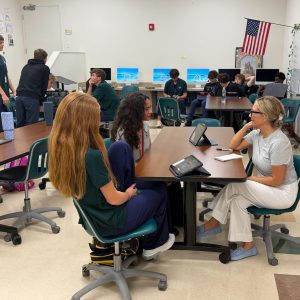
The St. John Neumann Catholic High School Sports Broadcasting class welcomed Kara Vaccaro, a planning producer from 60 Minutes! and CBS News, to the Naples school, Sept. 1, 2026. Students learned tips for better interviews, stronger questions, and planning B-roll that tells the story! Real-world experience. Real-world skills. Future broadcasters!
40 Days for Life kick-off rallies
The Fort Myers 40 Days for Life prayer vigil kick-off is 6 p.m., Sept. 20, 2026, 6418 Commerce Park Drive, Fort Myers (sidewalk outside Planned Parenthood), rain or shine. Come together to pray, stand for life, and hear an inspiring pro-life story from a very special guest speaker. Bring a lawn chair, water and umbrella. The rally includes a diaper drive (sizes 3-6) to support local pregnancy centers. The Sarasota 40 Days for Life kick-off rally will be 10 a.m., Sept. 24, St. Martha Parish, Father Fausto Hall, 200 N. Orange St., Sarasota. This campaign, scheduled at locations in Sarasota, Fort Myers and Naples, aims to end abortion through prayer and fasting, community outreach, and peaceful vigils in front of abortion facilities. For more information, please contact Tavia Ames at ames@dioceseofvenice.org or call 941-441-1101, visit https://www.40daysforlife.com/en/.
Knights support STREAM
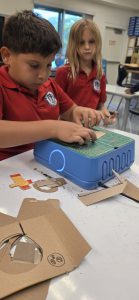 The St. Therese Parish, Knights of Columbus Council #8440, North Fort Myers, made a wonderful donation that allowed St. Mary Academy to purchase a Chompsaw, which helps students with special needs safely and independently cut cardboard for their school projects. This wonderful gift will make a meaningful difference, especially in the student’s STREAM classes (Science, Technology, Religion, Engineering, Art, and Math). The school is grateful for the support of their students and for helping to provide them with the tools and opportunities they need to learn, create, and succeed. To learn more about St. Mary Academy and the work they do for diverse learners please contact Connie Taft at 941-366-4010 ext. 318.
Youngest students learn engineering
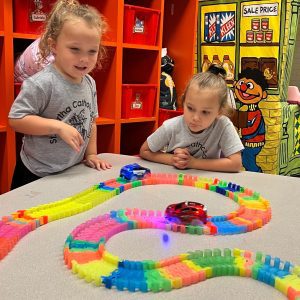
Students in the pre-K-3 classes of St. Martha Catholic School in Sarasota, had the opportunity to become engineers Sept. 1, 2026. The students worked together to build and redesign racetracks in different shapes, experimenting with curves, loops, twists, and turns along the way! As they connected the pieces and tested their cars, they were exploring shapes, spatial awareness, cause and effect, problem-solving, and early engineering concepts — all while practicing teamwork, communication, and perseverance. Building. Testing. Changing. Trying again. The best part? They didn’t even realize how much they were learning… they were just busy racing!
Monthly Days of Prayer at Venice retreat center
The Monthly Day of Prayer at our Lady of Perpetual Help Retreat Center, 3989 S. Moon Drive, Venice, is an opportunity to take time out of your busy and hectic life to focus on God. Join us Wednesday Sept. 9 or Sunday, Sept. 13, 2026, for “Heroic Service in the Church: The Life and Legacy of Venerable Bruno Lanteri.” Father Leland Thorpe, OMV, will share about the heroic holiness and service of Venerable Bruno Lanteri, founder of the Oblates of the Virgin Mary. Father Lanteri lived through times of great upheaval and was instrumental in rebuilding the Church in his day and raising up a wave of holiness among God’s people. His teaching and witness continue to be a blessing to the Church today, especially through the ministry of his spiritual sons, the Oblates of the Virgin Mary. The day begins at 9:30 a.m. with Continental breakfast and includes two conferences by an OLPH priest, the opportunity for the Sacrament of Reconciliation, lunch, and Mass. Time for adoration, private prayer, or meditation will also be available. The day concludes at 3:15 p.m. The cost is $45. Register here.
Young Adult Retreat Sept. 13, 2026
The Diocese of Venice is hosting a young adult retreat 9 a.m. – 4 p.m., Sept. 13, 2026, Our Lady of Perpetual Help Retreat Center, 3989 South Moon Drive, Venice. DISCERN: “Hearing God’s Voice in Everyday Life” will be led by Mother Nikopoia, SSVM. Learn how to recognize God’s voice in the middle of everyday life. Come for a day dedicated to prayer, reflection, and learning how to discover God’s will. Registration fee of $35 per person includes morning coffee and pastries, lunch and retreat materials. For more information, contact Andres Prias, 941-441-1122.
Theology on Tap, Thursday in Sarasota Sept. 17
Calling all young adults! Join Catholic young people from across the Diocese for an evening of fellowship, faith and fun! Theology on Tap is an opportunity for young adults in their 20’s and 30’s to explore faith topics in a relaxed social setting. Sessions take place on the third Thursday of every month at Oak & Stone, 5405 University Parkway, University Park. No need to register in advance. Next month, the group will meet on Thursday, Sept. 17, 2026, at 7 p.m. The featured speaker is T. Adam Van Wart, PH.D., Associate Professor of Theology at Ave Maria University. No need to register in advance. To learn more, contact Andres Prias, 941-441-1122. Join us!
St. Jude Catholic Church 20th Anniversary
At 6 p.m., Sept. 26, 2026, all are invited to an unforgettable evening of gratitude as St. Jude Catholic Church, Sarasota commemorates twenty years of faith, community and service. The evening will take place at Palm Aire Country Club, 5601 Country Club Way, Sarasota. There will be dinner, live music and dancing. Register Here. For more information, please contact Peg at fortep@msn.com.
Formation Program in Spanish
The next session of the Hispanic Apostolate’s Formation Program will begin on September 25th of 2026. We are celebrating the Jubilee Year of St. Francis of Assisi, founder of the Franciscan order. Our topic of study will be Introduction to the Devout Life. There will be a total of seven classes held from 7:00 pm. to 9:00 pm. on Fridays (Thursdays during Lent) through February 18th.2027. The cost for all the classes is $35, which includes the book. Students who register and attend a minimum of six classes at one of the participating parishes or online using our APP (www.pastoralhispanavenice.com) will qualify to receive a Diocesan Certification. For class information and to register, please visit www.dioceseofvenice.ot/programa-de-formacion.
Programa de Formación en español
La próxima sesión del Programa de Formación a cargo del Apostolado Hispano comenzará el 25 de setiembre del 2026. Estamos celebrando el Año del Jubilar de San Francisco de Assisi, fundador de la Orden Franciscana. Nuestro tema de estudio será “Introducción a la vida devota.” Habrá un total de siete clases que se darán los viernes por la noche de 7:00 pm a 9:00 pm. (jueves durante la Cuaresma) concluyendo el 18 de febrero del 2027. El costo por todas las clases es de $35 que incluye el libro. Los estudiantes que se inscriban y atiendan un mínimo de 6 clases ya sea en una de las parroquias participantes o vía online usando nuestro APP (www.pastoralhispanavenice.com) calificarán para recibir una Certificación Diocesana. Para obtener el Poster con más información así como un calendario de las clases www.dioceseofvenice.ot/programa-de-formacion.
Thank and honor our priests!
What is “Priesthood Sunday”? Priesthood Sunday is a special day (Sept. 27, 2026) set aside to honor the priesthood. It is a day to reflect upon and affirm the role of the priesthood in the life of the Church. In the Diocese of Venice, the Venice Diocesan Council of Catholic Women offer a unique opportunity to all to honor your priest, and to support our future priests, on this special day. Simply send a donation of any amount, along with the name of your priest, and the VDCCW will send a note to your priest letting him know he has been honored by you, and that a donation (undisclosed amount) has been made to the Diocesan Seminarian Fund to support future priests, in his name. Send your donation today to Cornelia Zanetti, Seminarian Fund Guardian, 5808 Gulf Drive, #204, Holmes Beach, FL 34217. Please make checks payable to the VDCCW Seminarian Fund. Thank you!
Rosary Congress coming in October
The Diocese of Venice annual Eucharistic Rosary Congress will take place in parishes October 3-9, 2026. This year’s theme is “My spirit rejoices in God my Savior.” The Eucharistic Rosary Congress will unfold slightly differently at each local parish but usually will begin with the celebration of daily Mass and end with Mass at the same time the next day. During the 24 hours between the two Masses, perpetual Adoration of the Blessed Sacrament is usually offered, with the five decades of the Rosary being prayed every hour. Many parishes will also have the Sacrament of Penance available at some point during the 24 hours. The abundance of prayer offered through this diocesan-wide effort will undoubtedly draw from the Lord many graces upon our families, the Diocese, the Universal Church, the nation, and the world. Check with your area parishes for specific details and schedules; a list of participating parishes will be available soon. For more information, contact Jim Gontis at 941-486-4754.
Verso l’alto: A Men’s Priestly Discernment Day Oct. 10
 Are you considering a vocation to the priesthood? Join the Diocese of Venice Vocations Office for “Verso l’alto: A Men’s Priestly Discernment Day,” Oct. 10, 2026, 8 a.m. – 8 p.m. at St. John the Evangelist Parish, Naples. For young men ages 16-35 who would like to learn more about the priestly vocation. Inspiring talks, discussions with seminarians, priests and peers, Mass, Adoration, food and fun! Stay tuned for registration information, or contact Father Alex Pince, Diocese of Venice Vocations Director, by email, or phone, 941-486-4703.
Celebrate Feast of St. Carlo Acutis in Cape Coral Oct. 12
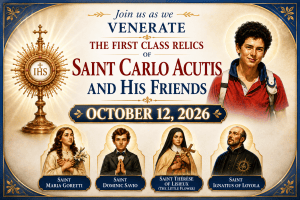 Venerate first-class relics of St. Carlo Acutis and his friends and mentors (St. Maria Goretti, St. Dominic Savio, St. Therese of Lisieux – The Little Flower, and St. Ignatius of Loyola), on his feast day, Oct. 12, 2026, 9 a.m. – 6:45 p.m. at St. Katharine Drexel Parish, 1922 SW 20th Ave., Cape Coral. St. Carlo Acutis was an Italian teenager who became the first millennial saint. He is best known for his devotion to the Holy Eucharist and his use of digital media to promote Catholic devotion including documenting Eucharistic miracles and Marian apparitions. The schedule of the day includes an opening 9 a.m. Mass with the Rite of Anointing, 9:45 Exposition of the Blessed Sacrament, a blessing of the new St. Carlo Acutis statue, Litany of the Saints and Veneration of the Relics, Holy Rosary and Divine Mercy Chaplet. From 11 a.m. to 6 p.m., each Holy Hour will be introduced with a brief story about the life of St. Carlo Acutis. The day concludes with a 6 p.m. Family Holy Hour with Benediction. All are welcome! No need to register. Join us!
Ignatian Preached Retreat
Our Lady of Perpetual Help Retreat Center, 3989 S. Moon Drive, Venice, is hosting an Ignatian Preached Retreat, Oct. 23-26, 2026. This three-night silent retreat will introduce you to the great themes of the Spiritual Exercises in a group setting. The schedule includes conferences each day, daily Mass, and an opportunity to meet at least once with the retreat director for Confession and/or spiritual direction. Conference topics center on Ignatian spirituality, prayer, and discernment. The cost is $525 per retreatant for a private room and $360 per retreatant for a shared room (retreatant to locate appropriate roommate where silence can be maintained). Please visit https://olph-retreat.org/schedule-of-events for more information or to sign up.
Sarasota Catholic school gala Oct. 24
Join the St. Martha Catholic School Annual Knights Gala at the beautiful Mote SEA, Sarasota, Oct. 24, 2026. Surrounded by the wonder of the underwater world, guests will enjoy an inspiring evening filled with faith, community, celebration, and purpose, featuring a lively cocktail reception, a gourmet dinner, and exciting live and silent auctions showcasing unique items, experiences, and opportunities to support our school. Sponsorships and tickets available now at https://onecau.se/_fmxtc1.
Grow together in holiness
Catholic married and engaged couples are invited to the sixth annual Together in Holiness Marriage Conference on Oct. 24, 2026, from 9 a.m.-4:30 p.m. at Our Lady of Light Parish in Fort Myers. Spend quality time with your spouse, hear from dynamic national and local speakers, and enhance your marriage through the Sacraments. Registration: $64/couple and $5/child for on-site childcare. An Early Bird discount is available through Sept. 14 as well as scholarships upon request. This conference is presented by the Diocese of Venice and the St. John Paul II Foundation. To register, visit www.forlifeandfamily.org/events/th26-vnfl/. Contact Jim Gontis at 941-486-4754.
Pray and take action to protect women and babies from abortion pills
With easier access to abortion pills, the abortion rate is tragically climbing, along with increased health risks. Please get involved in helping to stop the distribution of these dangerous pills! Here’s what you can do: The U.S Conference of Catholic Bishops’ (USCCB) Committee on Pro-Life Activities is inviting Catholics to join a focused effort of prayer and action to stop the spread of abortion pills. The initiative is taking place now through Oct. 31, 2026 (October is Respect Life Month, observed each year by the Catholic Church in the United States). Participants of the initiative are encouraged to share information about the dangers of abortion pills, and sign up to send messages to pharmacies, distributors, and pharmaceutical companies. Join the efforts of the United States Conference of Catholic Bishops and the National Committee for a Human Life Amendment and tell major companies that sell or distribute abortion pills to change course. Send your message via this link Action Center. More information is also available here.
Holiday Bereavement Outreach Retreats
Those grieving the loss of a loved one are invited to “There Is Hope: Coping with the Death of a Loved One During the Holidays”, a Catholic bereavement retreat led by Deacon Henry deMena and offered at four locations throughout the Diocese of Venice on Nov. 3-6, 2026. All retreats are from 8:30 a.m. to noon, at the following parishes: Nov. 3, Our Lady of Lourdes, Venice; Nov. 4, Sacred Heart, Punta Gorda; Nov. 5, St. Paul, Arcadia; Nov. 6, St. Agnes, Naples. For more information, contact Jim Gontis at 941-486-4754.
Pray for Safety! Hurricane Season
The 2026 Atlantic hurricane season continues through November 30. With a history of these storms producing destruction in the region, please pray for safety. To view or download a Prayer for Safety in Hurricane Season in English or Spanish, visit the Diocese of Venice website.
Volunteers needed for Prison Outreach
Join the team of Diocesan volunteers who enter county jails and state prisons within the 10-county Diocese of Venice to do pastoral outreach, distribute the Eucharist and facilitate programs. Priests, Deacons, and lay volunteers are encouraged to assist in this ministry. Volunteers will first participate in an orientation program before entering the facility and will shadow experienced volunteers until they feel comfortable. Times and days vary by facility. Please contact Joe Mallof at 224-217-7139 or Bob Hiniker 863-558-0407 to learn where you can fit into this joyful opportunity.
Support After Abortion help available
Are you or someone you know struggling because of a past abortion? You are not alone. Healing retreats and support are available for anyone who has experienced an abortion, including mothers, fathers and other family members who have been hurt. For help, or to learn more about the Diocese of Venice support after abortion program, Project Rachel, simply call or text 941-412-5860, or email project.rachel@dioceseofvenice.org, in English or Spanish. All contacts are confidential.
OLPH seeks volunteers
Many hands make light work. Our Lady of Perpetual Help Retreat Center in Venice is seeking volunteers. Aid the Diocesan retreat center in providing a peaceful, welcoming atmosphere for those who come seeking transformation in Christ. Areas of need include gardening, dishwashing, dining room, answering the phones and more. For more information, or to sign-up, please call 941-486-0233, or email info@olph-retreat.org.
Free Rosary Repair Service
Send your broken rosaries in a padded envelope to Betty and Dick Holden, Free Rosary Repair Service, 7930 Estero Blvd., Unit 502, Fort Myers Beach, FL 33931. Rosaries will be repaired and returned within the week of receipt. Donations of old rosaries are also accepted, which will be repaired and sent to missions. Include a note indicating repair or donation. For more details, please call 239-463-3993, 860-595-6370 or holdenbnd@gmail.com.





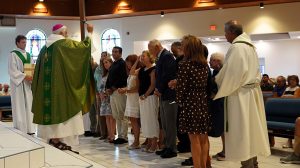
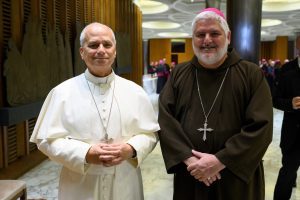
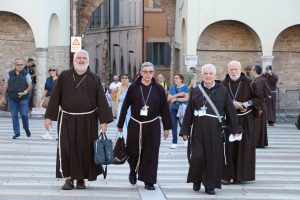
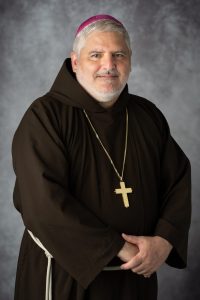
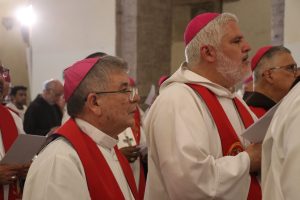 From Rome, the journey continued to Assisi for the gathering of Capuchin bishops from September 10–13. These days were a natural continuation of the formation received in Rome, with a particular emphasis on our identity and vocation as Capuchins.
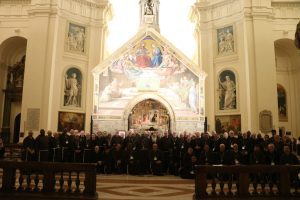 On the final day of the gathering in Assisi, the Capuchin Cardinal Sean O’Malley celebrated Sunday Mass and preached on Matthew 18:21–35, teaching that a defining mark of a Christian is the willingness and then the ability to forgive one’s brother from the heart. He shared examples of the genuine fruit of forgiveness and reconciliation. This was a profound teaching that can only truly be lived out through the action of the Holy Spirit. We pray for this grace and for each other.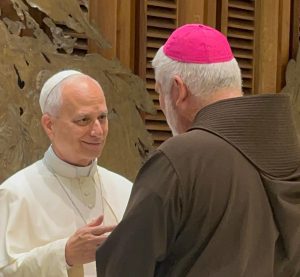
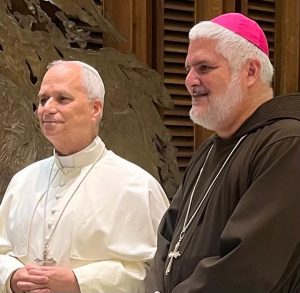
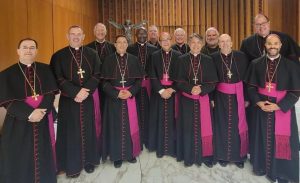 Bishop Emilio said this presentation explored the bishop’s identity and ministry through the “episcopal ordination prayer, especially the phrase ‘God has willed to be glorified in those whom he has chosen.’ Episcopal ministry begins with divine initiative and election, and its purpose is to make Christ visible through humble, holy, self-giving service, rather than personal achievement, prestige, or power.”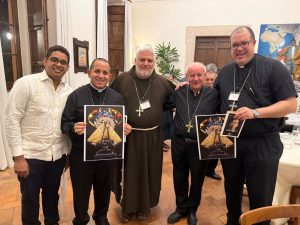
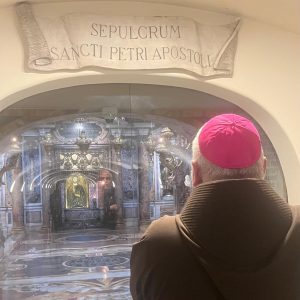
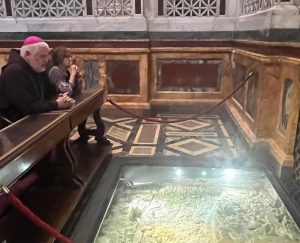
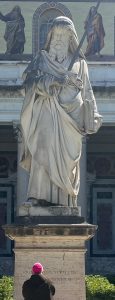
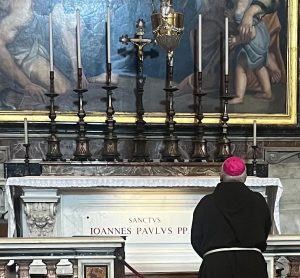
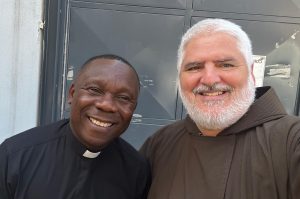 Earlier in his trip to Rome, Bishop Emilio took time to pray before the tombs of the apostles Ss. Peter and Paul, as well as those of several popes, carrying with him the prayers of the faithful of the Diocese of Venice. He also visited the tombs of St. John Paul II, St. John XXIII, St. Paul VI, St. Pius X, and Pope Benedict XVI.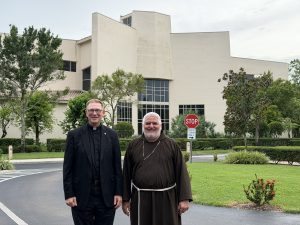
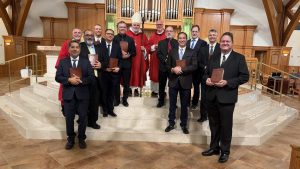
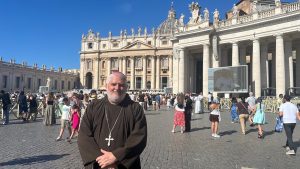 Also on Sept. 2, Bishop Emilio was present at the weekly catechesis presented by Pope Leo XIV in St. Peter’s Square.
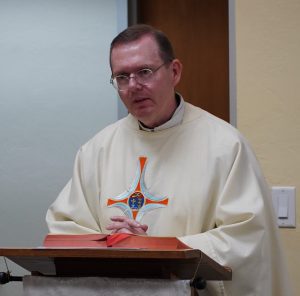
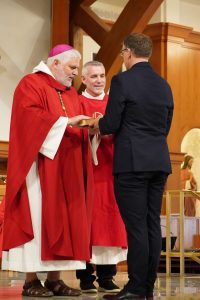
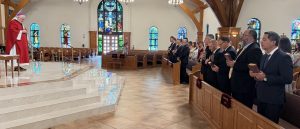
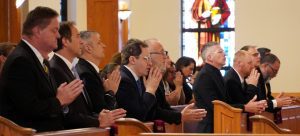
 Father David M. Vidal, as Vicar General of the Diocese of Venice in Florida, and Moderator of the Curia, effective Aug. 20, 2026, while retaining his responsibilities as Pastor of Ave Maria Parish in Ave Maria, for a time.