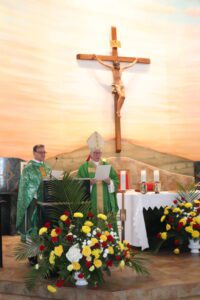
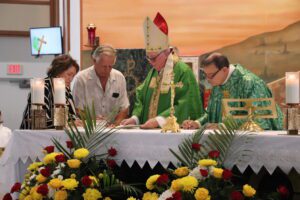
In October, the Catholic Church in the United States celebrates Respect Life Month, and the first Sunday of October is designated as Respect Life Sunday.
Also taking place is the 40 Days for Life fall campaign begins Sept. 27, 2023, with prayer vigils each day through Nov. 5, all to call for an end to abortion in the U.S., including Fort Myers, Naples and Sarasota.
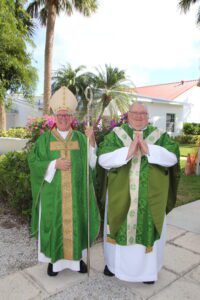
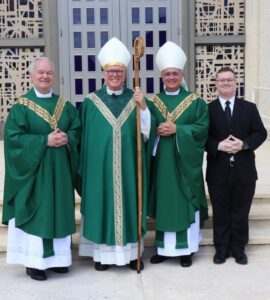
In a letter to the faithful regarding Respect Life Month, Bishop Frank J. Dewane stated: “As Catholics, we are called to teach, defend and protect those who are most vulnerable and promote a greater respect for life.”
 “The Catholic Church remains at the forefront in speaking out on the issue of the sanctity of life, from conception to natural death, and at every point in between,” Bishop Dewane wrote. “The Church’s entire social doctrine is guided by the fundamental principle that every human life has innate dignity and incomparable value. Fulfilling Christ’s command to love one another takes shape in our practice of this radical solidarity; solidarity by making the well-being of others our own.”
Diocese of Venice Respect Life Director Jeanne Berdeaux explains there are many opportunities for people to make a real difference in supporting life, whether through actively praying on the sidewalk at a 40 Days for Life prayer vigil, learning how to be a sidewalk counselor, contributing to the Respect Life collection, or praying from home for an end to abortion.
“The Pro-Life movement is all about people coming together in every way they can to be a witness for the unborn. Being a voice for the voiceless,” Berdeaux said.
This year, the U.S. Conference of Catholic Bishops Secretariat of Pro-Life Activities calls upon the faithful to focus on “Radical Solidarity,” seeking to inspire all Catholics to put their love for others into action by protecting, supporting, and accompanying mothers and their children.
To help live out this call to radical solidarity, Catholics are invited to join “Walking with Moms in Need.” Through this process, Catholic Parishes and communities walk in the shoes of local pregnant and parenting women to better understand, support, and respond to their needs. It is important for them to know they are not alone. For resources, please visit www.dioceseofvenice.org/respectlife.
40 Days for Life
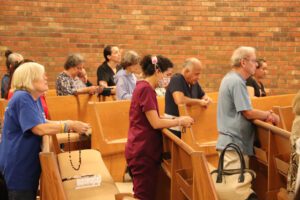
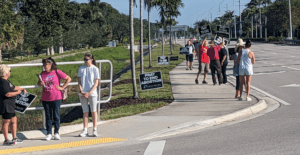
That 40 Days for Life takes place in hundreds of locations with local prayer vigils taking place in Sarasota, Fort Myers and Naples from Sept. 27 to Nov. 5. Faithful stand in prayer, in the public right of way, outside of abortion facilities seeking an end to abortion in the U.S. and the world.
Since its inception in 2007, 40 Days for Life participants report having saved 23,525 lives from abortion during a campaign. That’s the type of impact that led an ACLU spokesperson to describe 40 Days for Life as the “greatest threat to choice.”
40 Days for Life has contributed to a groundswell of pro-life support worldwide. More than 140 abortion centers, along with numerous referral centers, where campaigns have been hosted, have closed their doors forever.
The prayer vigil in Fort Myers is from 9 a.m. to 5 p.m. (Mon. – Sat.), at 6418 Commerce Park Drive. The kickoff is at 6:30 p.m., Sept. 26. For more information, please contact Paula and Rick at 40DaysforLifeFM@gmail.com, or visit 40daysforlife.com/fortmyers.
In Sarasota, the vigil is daily, from 7 a.m. to 7 p.m., 736 Central Ave., with a kick-off event at 10:30 p.m., Sept. 27. For more details, please contact Rich at 40DFLSarasota@gmail.com, or visit 40daysforlife.com/sarasota
Returning for the first time since the pandemic, the Naples prayer vigil is from 7 a.m. to 7 p.m. (Mon. – Sat.), at 1425 Creech Road. For more details, please contact Ricki & Katrina at 40DFLnaples@gmail.com, or visit 40daysforlife.com/naples. An opening prayer vigil took place Sept. 14, which coincided with the anniversary of the opening of the Planned Parenthood abortion center. Dozens came out to pray and be a witness for life.
Respect Life Collection
On the weekend of Sept. 30 and Oct. 1, Parishes across the Diocese of Venice will conduct a special collection to enhance this life-affirming work. The funds remain in the Diocese of Venice and facilitate a Culture of Life as a faith community in Southwest Florida and to support Respect Life Programs, among them, “Walking with Moms in Need.”
Respect Life Novena
If you would like to join others in prayer across the nation, there is a national Respect Life Month Novena from Oct. 13-21. Sign up at https://www.respectlife.org/ to receive an email with daily prayers for the protection of human life, from conception to natural death. The information offered will feature a different pro-life prayer intention accompanied by a short reflection and suggested actions to help build a culture of life.
Counselor training
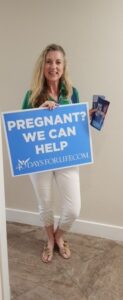
Anyone who has prayed outside an abortion center or just has a heart to help women and babies is encouraged to attend a training program from 10 a.m. to 4 p.m., Oct. 28, at St. John XXIII Parish Center, 13060 Palomino Lane, Fort Myers. Lauren Muzyka, Founder, President and CEO of the national organization, Sidewalk Advocates for Life, is coming to Fort Myers to train individuals interested in helping women choose life for their preborn babies. The peaceful, prayerful, law-abiding method of compassionate outreach has already saved more than 20,000 babies from abortion. Training material and lunch will be provided. For details and to reserve your spot, contact Cyrille at 917-991-6147, cyrillevelasco@gmail.com or Jeanne Berdeaux, Berdeaux@dioceseofvenice.org or 941-374-1068.
Post-Abortion Help
Are you suffering after abortion? There is hope and healing waiting for you. Many women and men experience deep pain and grief after an abortion and don’t know where to turn. They don’t realize there is help available for them. Project Rachel is the outreach of the Catholic church to those who are suffering this loss. We offer help through the sacraments, retreats, and referrals for professional counseling. For confidential information, contact Sylvia Jimenez, Project Rachel Coordinator, 941-412-5860 (English and en español), project.rachel@dioceseofvenice.org, or visit https://hopeafterabortion.com. Help is also available at Support After Abortion at https://supportafterabortion.com/.
More ways to Support Life
Other opportunities to support Pro-Life activities within the Diocese in October.
Life Chain Oct. 1
You are invited to witness for life and respect life causes on Respect Life on Oct. 1, from 2:30 p.m. to 3:30 p.m. Gather at 2 p.m. on US 41 across from Shikany Funeral Home, 28300 S. Tamiami Trail, Bonita Springs, or Seagate/Pine Ridge Roads in Naples (near St. William Parish). Pick up a sign or bring your own, then pick your spot between these locations to silently witness and pray for a greater respect for all human life. Questions? Contact Rich Evans at 239-776-9848.
5K Walk/Run for Life Oct. 7
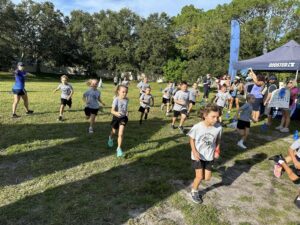
The 9th annual 5K Walk/Run for Life will take place Oct. 7, at St. Agnes Parish, 7775 Vanderbilt Beach Road, Naples. Registration on the day of the event opens at 6 a.m. with the race beginning at 7:15 a.m. This event is meant to promote a respect for life message and raise funds for pro-life causes. To register please visit the Run for Life link at www.stagnesnaples.org. For additional information please contact the Parish Office at 239-592-1949 or email Deacon Roberto at deaconroberto@stagnesnaples.net.
An Afternoon of Healing
An Afternoon of Healing is a powerful day of Prayerful Remembrance and Intercession. Created in the spirit of the New Evangelization and designed for all of our community seeking healing through acknowledgment of the far-reaching impact from participation in abortion. The afternoon will begin at noon, Oct. 7, at St. John the Evangelist Parish, 625 111th Avenue North, Naples, and concludes at 3 p.m. with the Holy Sacrifice of the Mass. There will be a brief talk given by post-abortion speaker Mary Eisman exploring “The Far-Reaching Impact of Abortion on our Family, Friends, and Society.” Individual Testimonials, Reflections and Intercessory Prayer, a Holy Hour with Exposition of the Blessed Sacrament and the Sacrament of Reconciliation, as well as recitation of the Holy Rosary will lead up the celebration of the Mass. On this day we offer the opportunity for everyone to come together for a period of contemplation, grace and prayerful intercession seeking forgiveness and healing for ourselves and for our nation. For further information please contact the Parish at 239-566-8740.
Dinner for Life
Are you looking for a fun and meaningful way to spend your evening? Do you want to support a great cause and enjoy a delicious meal? If so, you are invited to attend a Dinner for Life, a special event to celebrate and support the Culture of Life in our community. This event will be held beginning at 5 p.m., Oct. 7, at the Columbus Banquet Hall, located at 4880 Fruitville Road, Sarasota. Appetizers will be served followed by a delicious prime rib dinner at 6 p.m. You can also enjoy cocktails served at the cash bar. This event will feature guest speakers from Solve Maternity Homes and 40 Days for Life. You will also hear from Father Chris of Saint Martha Church, who will share his insights and experiences on the importance of defending the dignity and sanctity of human life from conception to natural death. The Dinner for Life is a fundraiser event to support these two non-profit organizations that provides Christ-centered care to pregnant mothers in our community and surrounding areas. The tickets for the event are $40 per person or $320 per table of eight. You can purchase your tickets in advance at the Parish Office of St. Martha Parish, 200 N. Orange Avenue, Sarasota.
IVF Conference
An In Vitro Fertilization Conference featuring Father Tad Pacholczyk, PhD, from the National Catholic Bioethics Center, will be taking place from 1 p.m. to 4:30 p.m., Oct. 7, in the Prince Building Auditorium at Ave Maria University in Ave Maria. The event is free, but registration is required at www.floridacma.org. Presented by the Southwest Florida Guild of the Catholic Medical Association, this two-lecture event is titled “Longing for Life: Catholics, Infertility, and IVF.” and will explore both our natural yearning for offspring and the reasons why IVF is morally objectionable. Presentation titles are: “What is the Spiritual Significance of Infertility?” and “Why is In Vitro Fertilization Wrong?” Potential alternative therapies to help resolve underlying causes of infertility, and related approaches that are ethically congruent with marital intimacy, will also be discussed.